

Meals Included on PaxTravelTweaks: What Meals Are Covered in Your Booking?
Picture this. You land after a long flight and check in. Then you learn dinner isn’t covered. Your budget just took a hit. That moment starts with one small line on a booking page.
Few details cause more confusion than meals included on PaxTravelTweaks listings. Some bookings feed you three times a day. Others hand you a coffee and wish you luck. You can sort it out in minutes if you know where to look. The quick table below shows the usual pattern.
What Does Meals Included on PaxTravelTweaks Mean?
Meals included on PaxTravelTweaks means the meals your price already pays for. Your booking confirmation lists them. So does the What’s Included section on the product page. If a meal appears there you won’t pay extra at the table. If it doesn’t appear you will. Think of it as a simple receipt for your stomach.
No single menu applies to every booking. PaxTravelTweaks meal inclusions change with the product you choose. A trek, a hotel bundle, and a flight all follow different rules. Each one carries its own meal inclusion policy. The split between included and excluded meals sits in your own paperwork. Always trust that paperwork over any blog post.
Why Meal Inclusions Vary by Travel Booking
Many things shape travel meal packages. The booking type matters most. The provider’s rules come next. Destination, trip length, and price tier also play a part. A remote mountain lodge may cover every plate because no restaurant exists nearby. A big city usually leaves lunch and dinner open. Locals eat well there and you can too.
Operators leave some meals open on purpose. It keeps the headline price lower. It also lets you taste local food on your own terms. That freedom has a price tag though. Every open meal becomes part of your travel food expenses. The table below shows why sweeping claims fall apart.
| Claim you will see | Why it can’t be universal | What to check instead |
| “Breakfast is always included” | A flight or room-only accommodation may include none | Your travel itinerary meal line |
| “All meals are covered” | Only full board and all-inclusive travel packages do that | The meal plan label |
| “Dietary needs are accommodated” | Each provider sets its own rules | Written confirmation |
| “No hidden fees” | Drinks and tips are common extras | The booking exclusions list |
What Meals Are Included by Booking Type?
Meal coverage by booking type is the fastest way to predict your costs. The word “meals” means something different on a trek than on a flight. A hotel works differently again. Each category below shows what you can usually expect. Treat these patterns as starting points because your own booking has the final say.
Many trips mix two or three booking types. A tour might include a flight and a hotel night. In that case meal coverage verification needs several steps. Check each segment on its own. Then add up the results. That habit saves you from nasty surprises on day three.
Guided Tours and Trekking Packages
On guided tour meals, the operator lists food day by day. TourRadar’s support page points customers to the “What’s Included” tab and a meals subsection, which is a handy model for reading any tour operator meal policy. Real listings vary a lot. One traveler on TourRadar’s community forum asked about a nine-day Turkey tour listing eight breakfasts, five lunches, and four dinners. That adds up to 17 of 27 possible meals, so ten stay open meals. Trekking packages often cover more because teahouses and camps sit far from restaurants. Guided tour operators may still leave a few lunches or dinners to you. Look for the words “on your own” next to those slots.
Cruises and Tour Packages With Land Excursions
Cruise dining inclusions usually cover the main dining room and buffet. You get onboard dining at no extra charge. Specialty restaurants carry a surcharge. The surprise comes on land. Land tour meals are often separate from the ship’s food. Some cruises include a few land lunches. Others include none. Read the meal line for each segment and never assume the ship’s rules follow you ashore. Optional dining plans may cover the gaps. Compare their price with the cost of eating out.
Flights and Train Journeys
Airline meal services depend on the carrier, the route, and the fare. Domestic flight meals are often limited to a drink and a snack. International flight meals are more likely to include a full tray. Airline fare rules spell out what your ticket buys. Train meal services vary even more. Some first-class train fares include a meal. Standard train fares usually don’t. Onboard prices run higher than a packed lunch so check your ticket class before boarding.
Hotel Stays and Accommodation Packages
Hotel meal plans are the most standardized part of travel. Your hotel reservation meal details carry a clear label. That label shows exactly where coverage stops. A room-only rate means no food at all. A bed and breakfast plan adds the first meal of the day. Some plans stretch to dinner. Hotel accommodation at a resort often offers bundles that include more. Room service is almost always an extra. Check the label before you pay.
Understanding Different Meal Plan Terms
Meal plan labels look like code. Once you crack it, you read any hotel offer in seconds. The same plan can wear different names around the world. In North America you may see “European Plan.” In the UK you may see “bed and breakfast.” Both describe the same idea. The table below translates the common terms.
| Meal plan label | Also called | What is covered | Best for |
| Room only | European Plan | No meals | Travelers who want full dining freedom |
| Bed and breakfast | Continental Plan | Breakfast only | Most city trips |
| Half board | Modified American Plan | Breakfast plus lunch or dinner | Resorts with limited nearby dining |
| Full board | American Plan | Breakfast, lunch, and dinner | Remote locations and families |
| All-inclusive | None | Meals, snacks, and usually drinks | Beach resorts and cruises |
Two cautions apply. First, a plan name rarely tells the whole story. Always read the fine print. Second, drinks and gratuities often sit outside the plan. Ask what “included” really covers. A friendly email to customer support clears up most doubts.
Bed and Breakfast (BB)
The bed and breakfast plan covers the first meal of the day and nothing more. It suits city trips because lunch and dinner options sit on every corner. Watch the wording though. Some hotels serve a full hot spread while others offer a light continental breakfast of bread, fruit, and coffee. Ask what the buffet includes if breakfast matters to you. Treat breakfast included as a promise of food and not a promise of a feast.
Half Board (HB)
The half board meal plan pairs breakfast with one other meal. Most hotels serve dinner as the second meal. Some offer lunch instead. The listing often doesn’t say which one so ask before you book. Half board makes sense when restaurants nearby are scarce or pricey. It also keeps your evenings simple. Compare the upgrade price with what you’d pay for the dinners yourself. Lunch and dinner can differ by $15 to $40 per person at the same property.
Full Board (FB)
The full board meal plan covers breakfast, lunch, and dinner. It works well for remote lodges and for families who want fewer decisions. Lunch and dinner included also means a steady schedule. You eat when the kitchen serves. Drinks usually cost extra unless the listing says otherwise. Ask whether the plan covers water, tea, or coffee with meals. A small detail like that can add up over a week.
All-Inclusive Meal Plans
All-inclusive travel packages bundle meals, snacks, and usually drinks. They look simple but they hide limits. Included drinks and snacks may exclude premium alcohol. Specialty restaurants may need a reservation or a fee. Room service may carry a charge. Some resorts also limit certain items to specific hours. Read the exclusions list before you assume everything is free. A good all-inclusive deal can save money. A poor one just moves the bill to another line.
See Also: Jim Taiclet and Martin Scorsese: Why Are These Two Names Connected?
How to Check Meal Inclusions in Your Travel Itinerary
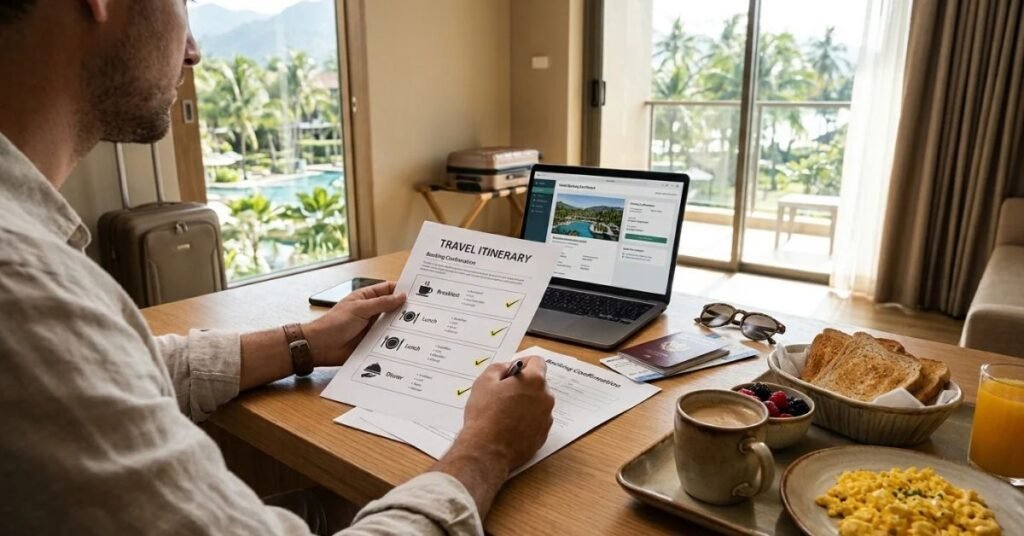
Your travel itinerary is the best map of your food. Look for travel itinerary meals shown as codes such as B, L, and D. Look for the words “included” or “not included.” Watch for meals on your own. That phrase means the meal isn’t covered. You choose where to eat and you pay. Count every one of those slots. They form your real daily food expenses.
Pay close attention to arrival and departure days. They usually carry the fewest inclusions. You might land after dinner. You might leave before breakfast. The sample below is illustrative and not a real PaxTravelTweaks product. It shows how a five-day plan can look.
| Day | Breakfast | Lunch | Dinner | What you pay |
| 1 | Not included | Not included | Group welcome dinner | Lunch |
| 2 | Included | On your own | On your own | Lunch, dinner |
| 3 | Included | Included | On your own | Dinner |
| 4 | Included | On your own | Included | Lunch |
| 5 | Included | Not included | Not included | Lunch, dinner |
How to Confirm Included Meals Before Booking
Confirm your meals before you enter card details. This habit takes ten minutes. It can save you hundreds. Start with the What’s Included section. Read every line. Then check the booking exclusions list for drinks, tips, and extras. Do this for each part of the trip. A flight, a hotel, and a tour may each follow different rules. Use the table below as a simple route.
| Step | What to do | Why it matters |
| 1 | Open the product page and find the inclusions area | It names the meals on offer |
| 2 | Read the meals line by line | It separates included and excluded meals |
| 3 | Check each day of the itinerary | It exposes open meals |
| 4 | Identify the meal plan label for hotels | It shows where coverage stops |
| 5 | Review airline fare rules for flights | It shows what your ticket buys |
| 6 | Read the meal exclusions | It reveals hidden costs |
| 7 | Screenshot the page on booking day | It proves what was offered |
| 8 | Email support and save the reply | It gives you customer support confirmation |
Step seven matters more than most people expect. Pages change over time. Your screenshot shows what you saw when you paid. A travel booking confirmation can also change after a system update. Keep a copy of every version. Good records turn a disagreement into a quick fix.
Here is a short case study. Imagine a traveler who books a mountain tour. The page says “meals included.” She assumes all three meals. She later learns that lunch on day two was on her own. Because she screenshotted the page and emailed support, she saw the wording clearly. She budgeted the extra lunch before leaving. No stress and no surprise.
See Also: Online PlayMyWorld: What It Is, Gaming Features, Latest Updates, and What to Know
Treat every general claim online as a reason to check your own booking.
What Happens When Meals Are Not Included?
When a meal isn’t covered, it becomes your cost. Nothing dramatic happens. You simply pay at the restaurant. Travel food expenses can climb fast in expensive cities. They stay low in places with cheap street food. The trick is to know the number before you leave. A surprise bill feels worse than a planned one.
Uncovered meals also bring freedom. You pick the place and the price. You can follow a local’s tip and find a hidden gem. You can skip a meal if you’re not hungry. Smart pre-trip planning turns this freedom into an advantage. The next two sections show how to plan and how to save.
How to Budget for Food During Your Trip
A travel meal budget needs three steps. Count your open meals. Multiply each by a realistic local price. Then add a travel budget buffer of about 15 percent. These meal cost estimates work in any currency. The example below uses illustrative US dollar prices for a five-day trip. Replace them with local averages for your destination.
| Item | Count | Average cost | Subtotal |
| Breakfasts (included) | 5 | $0 | $0 |
| Lunches (on your own) | 5 | $16 | $80 |
| Dinners (on your own) | 4 | $32 | $128 |
| Drinks and snacks | 5 days | $8 | $40 |
| Buffer (15%) | $37 | ||
| Total meal budget | $285 |
Practical Ways to Save Money on Travel Meals
Food costs while traveling shrink with a few smart habits. Eat the included breakfast fully. Slip a piece of fruit into your bag for later. Make lunch your main restaurant meal because lunch menus often cost less. Ask your guide or front desk for local restaurant recommendations instead of eating beside major sights. Carry a refillable water bottle so you skip bottled water prices. Pack a few snacks for travel days when transfers fall between meal times.
Dietary Requirements, Food Allergies, and Special Meal Requests

Dietary restrictions need early planning. Vegetarian travel meals, vegan meal options, gluten-free travel meals, halal meal options, and kosher meals are often available on request. Availability depends on the provider and the location. Airlines usually want advance meal requests a day or two before departure. Hotels and tour operators often want the details at booking. Don’t assume the meal line covers your needs. Ask directly and ask early.
Food allergies during travel call for extra care. State the allergy when you book and not on arrival. Ask support to note it on the reservation and reply in written confirmation. Reconfirm with the hotel or guide a few days before travel. Carry safe snacks as a backup. For serious allergies, ask your doctor what precautions you need. Don’t rely on a kitchen’s best effort alone. The table below shows a simple order of action.
See Also: Jerry Speyer and Robert De Niro: What Connects These Two New York Icons?
| Step | Action |
| 1 | Tell the provider about your need at booking |
| 2 | Ask for written confirmation |
| 3 | Reconfirm before travel |
| 4 | Carry safe gluten-free food options or other snacks |
Benefits of Having Meals Included in a Travel Package
Included meals in travel bookings bring real comfort. You skip daily decisions. You know the plan before you land. The price on the page feels more honest. Still, included meals aren’t always the cheapest choice. Compare the package price with what you’d pay on your own. A little math protects your wallet.
Meals also shape your mood on the road. A hungry traveler gets tired fast. A fed traveler enjoys the view. The four benefits below show why many people choose travel meal packages. Each one helps in a different way.
Better Travel Value and Predictable Expenses
Bundled pricing makes your travel meal budget easier to track. You see one total instead of dozens of small bills. That clarity helps you compare a package against paying meal by meal. Predictable costs also reduce stress. You can spend extra on a special dinner because the rest is covered. Good meal coverage by booking type often turns a vague budget into a firm number.
Less Cash to Carry and Fewer Unexpected Costs
Prepaid meals mean fewer payments abroad. You carry less cash and swipe your card less often. That cuts exchange fees and the risk of loss. It also limits surprise charges. Keep in mind that service charges and tips may still apply. Meal exclusions can hide in small print so read them. Fewer transactions don’t always mean zero extras.
Convenience, Comfort, and Food Hygiene
Pre-arranged meals save time after long travel days. You sit down and eat. Operators often use vetted kitchens too. That can lower the risk of upset stomachs in unfamiliar places. Convenience matters most on treks and remote trips. Few shops exist there and the next hot meal may be hours away. Good planning keeps energy high and spirits brighter.
Sustainable Food and Water Practices During Treks
Trekking meals can support local communities. Teahouses and camps often buy supplies nearby. Bring a refillable water bottle and use the treatment method your guide recommends. That cuts plastic waste on the trail. Skip single-use packaging when you can. Eat what the kitchen cooks so less food goes to waste. Small habits protect the places you came to see.
Common Mistakes to Avoid When Checking Meal Inclusions
Most travelers make the same few errors. They read “meals” as “all meals.” They skip the exclusions list. They assume a full hot breakfast when the property serves a light spread. These slips are easy to fix. A slow, line-by-line read catches almost all of them. Make it a habit before every payment.
Other mistakes show up later. People forget that included meals can still carry a service charge or gratuity. They book late and find that dietary meal requests have closed. They ignore arrival and departure days. Some even treat a blog’s description of meals included on PaxTravelTweaks as a contract. Your confirmation is the only contract that counts.
| Mistake | Better move |
| Reading “meals” as “all meals” | Check each meal by name |
| Skipping the exclusions list | Read drinks and gratuities terms |
| Assuming a hot breakfast | Ask what the buffet includes |
| Booking late for special meals | Send advance meal requests early |
| Ignoring travel days | Budget for gaps on arrival and departure days |
Pre-Trip Checklist: What to Verify About Your Meals
A pre-trip meal checklist keeps you calm. Run it before you pay. Run it again a week before you leave. Each task takes a minute or two. Together they turn guesswork into facts. They also give you proof if a dispute ever arises.
Use the table below as your guide. Save your screenshots in your phone and in your email. Name your meal plan label in one phrase. Count your open meals and write down the number. Put your dietary restrictions in writing with the provider. Set your budget with a buffer. Pack snacks for at least one travel day.
| Task | Done when |
| Inclusions screenshot saved | Image is on your phone and in your email |
| Meal plan identified | You can name it in one phrase |
| Open meals counted | You have a number and not a guess |
| Dietary request confirmed | You have it in writing |
| Exclusions noted | Drinks, tips, and specialty dining are listed |
| Budget set | It includes a 15 percent buffer |
| Snacks packed | You have enough for one travel day |
Frequently Asked Questions
Is breakfast always included in travel bookings?
No. Breakfast included is the most common inclusion across hotels and tours. Flights and room-only rates often carry none. Only your itinerary, fare rules, or hotel reservation meal details can confirm it. Check before you pay and keep a screenshot. Remember that a “breakfast” may be a continental breakfast of bread and coffee. Ask what it includes if you need more.
What does “meals on your own” mean in an itinerary?
Meals on your own means the meal isn’t covered. You choose where to eat and you pay yourself. “Not included” carries the same meaning for your wallet. Operators use this wording to give you freedom to explore local food. Count these slots because they form your real travel food expenses. Your guide can often suggest good places nearby.
Are drinks and snacks included with meals?
Often not. Water, coffee, and tea may come free while soft drinks and alcohol usually cost extra. Many all-inclusive travel packages cover drinks but exclude premium brands. Check whether included drinks and snacks apply all day or only at meals. If the listing is vague, ask support to confirm in writing. That saves you from a bill at checkout.
What is the difference between half board and full board?
The half board meal plan covers breakfast plus one other meal, usually dinner. The full board meal plan covers breakfast, lunch, and dinner. Half board gives you more freedom at midday. Full board gives you more certainty. Choose based on where the hotel sits and how many good restaurants surround it.
Can I request vegetarian, vegan, or gluten-free meals?
Usually yes. Airlines, hotels, and tour operators often handle vegetarian meal requests, vegan meal options, and gluten-free food options with advance notice. Ask at booking and request a written reply. Reconfirm before you travel. Availability depends on the provider and the destination so never assume. For serious food allergies, speak to your doctor about precautions too.
Do included meals cover tips and service charges?
Usually not. Service charges and gratuities are often separate even when the meal itself is free. Cruises may add automatic tips to your account. Hotels may add a charge to a plan. Read the booking exclusions list for these items. When in doubt, send a short email and keep the answer.
Where can I find official meal inclusion details?
Use the inclusions section of your booking page and your confirmation email. Those documents hold the official meal inclusion policy for your trip. Airlines publish their own airline fare rules. Hotels and tour operators publish their own policies. Third-party articles can guide you but they can’t replace those sources. If the details look unclear, ask customer support for written confirmation.
Final Thoughts
The most useful fact about meals included on PaxTravelTweaks is simple. The answer lives in your own itinerary and not in any article. Breakfast included is the likeliest inclusion. Lunch and dinner depend on the plan. Drinks and tips are often separate. Read the inclusions, identify the meal plan label, count your open meals, and budget with a buffer.
Then save your confirmation and ask your questions in writing. That small habit protects your wallet and your mood. It also frees you to enjoy the trip. Treat every general claim online as a prompt to check your own booking. Good pre-trip planning keeps your plate full and your budget calm.