
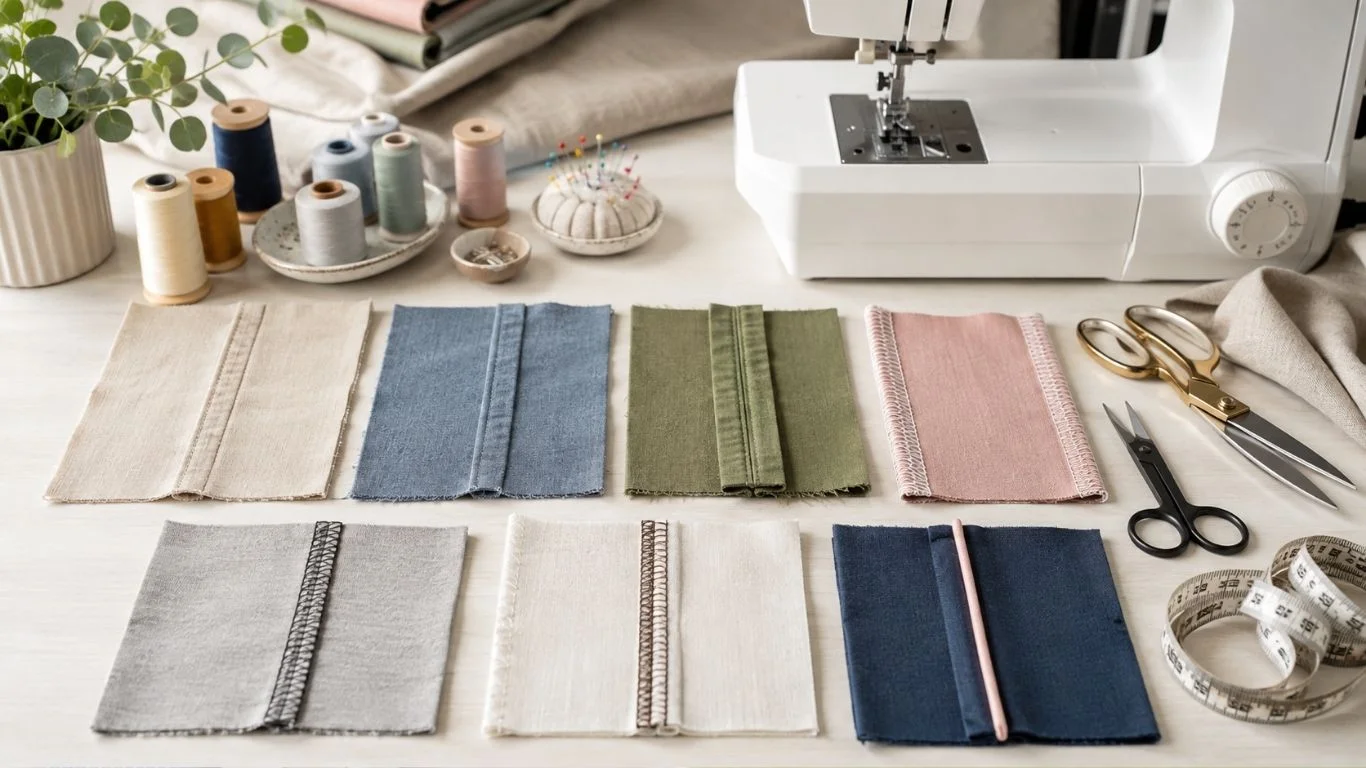
Nahttypen: A Complete Guide to Different Types of Seams and Their Uses
Sewing is a creative and practical skill that allows people to transform pieces of fabric into beautiful clothing, accessories, and household products. However, creating a successful sewing project involves more than choosing attractive fabric and following a pattern. One of the most important elements of sewing is understanding how different seams work. This is where the term nahttypen becomes important. It refers to different types of seams used in sewing and textile production.
Whether someone is a beginner learning basic stitching techniques or an experienced tailor working on professional garments, understanding different seam types can make a significant difference in the final result. Each seam has its own construction method, appearance, strength, and purpose. Some are designed for everyday clothing, while others provide extra durability or decorative details.
In this comprehensive guide, we will explore nahttypen, their common variations, practical applications, advantages, and the factors to consider when choosing the right seam for a sewing project.
What Does Nahttypen Mean?
The word nahttypen comes from German terminology. It combines the concepts of seams and types, referring to the different ways fabrics can be joined together through stitching.
In sewing, a seam is created when two or more pieces of fabric are connected using thread and a sewing technique. Seams help garments maintain their shape, provide structural support, and create clean edges.
Different projects require different seam constructions. For example, a lightweight summer dress may need delicate seams that reduce bulk, while denim jeans require strong stitching that can withstand repeated movement and washing.
Understanding nahttypen helps sewers identify which construction method is suitable for a particular fabric, garment, or design.
Why Are Different Seam Types Important?
Seams are essential because they influence the quality, appearance, and durability of finished products. Choosing an unsuitable seam can cause problems such as loose stitching, fraying fabric, uncomfortable edges, or weak garment construction.
There are several reasons why selecting the right seam matters.
1. Improved durability
Strong seams help garments withstand regular use. This is particularly important for workwear, jeans, jackets, uniforms, and other clothing that experiences frequent movement.
2. Better appearance
A suitable seam creates a clean and professional finish. Some seams remain hidden inside garments, while others become visible decorative features.
3. Greater comfort
Seam placement and construction influence how clothing feels against the skin. Flat and lightweight seams can help reduce irritation, especially in sportswear and underwear.
4. Better fabric management
Different materials behave differently during sewing. Selecting the correct seam helps prevent stretching, puckering, and unnecessary fabric damage.
5. Professional finishing
Tailors and clothing manufacturers use appropriate seam techniques to create products that look polished and maintain their quality over time.
Common Types of Nahttypen
There are many seam variations used in modern sewing. The following examples represent some of the most popular and practical techniques.
1. Plain Seam
The plain seam is one of the most basic and widely used sewing techniques. It is created by placing two pieces of fabric together with their right sides facing each other and stitching along the required seam allowance.
After sewing, the fabric pieces are opened so the seam allowance sits on the inside of the garment.
Plain seams are commonly used in shirts, trousers, dresses, skirts, and many other clothing items.
Their biggest advantage is simplicity. Beginners can learn this technique quickly, and it works well with many different fabrics.
However, plain seams may require additional finishing because their raw edges can fray. Overlocking, zigzag stitching, or binding can help prevent this problem.
2. French Seam
A French seam is a neat finishing technique that completely encloses the raw fabric edges inside the seam.
Unlike a traditional plain seam, the French seam involves two stitching stages. First, the fabric is placed with the wrong sides together and stitched with a narrow allowance. The seam is then trimmed, folded, and stitched again with the right sides together.
This construction creates a clean interior finish without exposed raw edges.
French seams are particularly useful for lightweight and delicate materials such as chiffon, silk, and voile.
They are popular in elegant blouses, dresses, and lightweight garments where the inside appearance matters.
One limitation is that French seams create additional thickness, making them less suitable for very heavy fabrics.
3. Flat-Felled Seam
The flat-felled seam is known for its strength and durability. It is commonly used in denim jeans, workwear, shirts, and outdoor clothing.
In this technique, one seam allowance is folded around the other and stitched down. This creates an enclosed seam with visible parallel stitching lines.
The construction reduces exposed raw edges and produces a strong connection between fabric pieces.
Flat-felled seams are especially useful in areas that experience stress, such as trouser legs and side seams.
Although this technique requires more time and precision than a plain seam, its durability makes it a valuable choice for garments designed for regular use.
4. Overlocked Seam
An overlocked seam is created using an overlock machine, commonly known as a serger.
The machine uses loopers and needles to stitch around the fabric edges, joining the material while preventing fraying.
Overlocked seams are widely used in commercial clothing production because they are efficient and provide a professional finish.
They are particularly suitable for knitted fabrics, casual clothing, T-shirts, leggings, and many everyday garments.
An important advantage is that overlocking can finish raw edges quickly while maintaining flexibility.
However, an overlocked edge may not provide the same strength as some reinforced seam constructions. For this reason, manufacturers sometimes combine overlocking with additional stitching.
5. Double-Stitched Seam
A double-stitched seam contains two parallel lines of stitching. This construction can provide additional strength and help secure areas that experience regular tension.
It is commonly found in jeans, jackets, bags, uniforms, and casual clothing.
Double stitching can also create an attractive decorative appearance, especially when contrasting thread colors are used.
The technique is useful when a garment needs both visual detail and additional reinforcement.
However, the spacing between the stitching lines should remain consistent to achieve a professional finish.
6. Bound Seam
A bound seam uses an additional strip of fabric or binding material to cover the raw edges.
This technique creates an attractive interior finish while protecting fabric edges from fraying.
Bound seams are often used in unlined jackets, coats, skirts, and tailored garments.
They are particularly helpful when the inside of a garment may be visible during wear.
Binding can be created with matching fabric, contrasting fabric, or specially prepared bias tape.
Although the technique requires additional material and sewing time, it can significantly improve the finished appearance.
7. Lapped Seam
A lapped seam is constructed by placing one fabric edge over another and stitching through the overlapping layers.
This technique is useful when a flat and relatively strong connection is needed.
Lapped seams are often used in leather products, sportswear, decorative garments, and certain industrial textile applications.
Because the fabric pieces overlap, the seam can create additional thickness. Therefore, the technique should be selected according to the material and final design.
Understanding Seam Types by Their Purpose
Different nahttypen can also be classified according to their practical functions.
Structural Seams
Structural seams are responsible for joining garment pieces and maintaining the overall shape of a product.
Examples include plain seams, flat-felled seams, and lapped seams.
These constructions are important in clothing such as trousers, jackets, shirts, and dresses.
Decorative Seams
Decorative seams contribute to the visual design of a garment. They may use contrasting threads, parallel stitching, or special patterns.
Double-stitched seams and visible topstitching are common examples.
Designers often use these techniques to make ordinary clothing look more distinctive.
Finishing Seams
Finishing seams protect raw fabric edges and improve the interior appearance of garments.
French seams, bound seams, and overlocked edges are common examples.
They help clothing maintain a professional appearance while reducing the possibility of fraying.
Reinforced Seams
Reinforced seams are designed to handle additional pressure and movement.
They are especially important in workwear, uniforms, outdoor clothing, and products used in demanding environments.
Additional stitching, stronger thread, and suitable seam construction can improve performance.
How to Choose the Right Nahttypen for Different Fabrics
Choosing a seam requires understanding the properties of the fabric. Weight, thickness, flexibility, and texture can all influence the final result.
Lightweight Fabrics
Materials such as chiffon, silk, and lightweight cotton require careful handling.
French seams are often an excellent choice because they hide raw edges and create a clean finish.
Fine thread and suitable needles also help prevent unnecessary fabric damage.
Heavy Fabrics
Denim, canvas, and thick cotton require stronger construction methods.
Flat-felled seams and reinforced stitching are useful options because they provide additional durability.
A suitable heavy-duty needle and strong thread can further improve the quality of the finished seam.
Stretch Fabrics
Knitted materials and elastic fabrics need seams that can move with the garment.
Overlocked seams and appropriate stretch stitches are commonly used for this purpose.
A standard straight stitch may break when the fabric stretches significantly, so selecting a flexible stitch is important.
Delicate Fabrics
Thin or easily damaged materials need gentle sewing techniques.
Using the correct needle size, reducing unnecessary tension, and selecting an appropriate seam allowance can help produce better results.
Essential Tools for Creating Quality Seams
The right tools make sewing easier and help produce consistent results.
Some essential equipment includes:
- Sewing machine: Used to create different stitch patterns and join fabric pieces.
- Overlock machine: Helps finish raw edges and create flexible seams.
- Fabric scissors: Provides clean and accurate fabric cutting.
- Measuring tape: Helps measure fabric and maintain consistent seam allowances.
- Sewing pins: Hold fabric layers together before stitching.
- Seam ripper: Removes incorrect stitches without damaging the fabric unnecessarily.
- Quality thread: Provides reliable stitching and helps improve seam durability.
- Appropriate needles: Different needle sizes and types are suitable for different materials.
Having these tools available can make both simple and advanced sewing projects more manageable.
Common Mistakes to Avoid When Sewing Seams
Even experienced sewers occasionally make mistakes. However, understanding common problems can help prevent poor results.
Using the Wrong Needle
An unsuitable needle can damage fabric, create skipped stitches, or cause thread breakage.
Always select a needle that matches the material being used.
Incorrect Seam Allowance
Inconsistent seam allowances can affect garment measurements and cause pieces to fit incorrectly.
Using a measuring guide or marking the fabric before stitching can help maintain accuracy.
Incorrect Thread Tension
Thread tension that is too tight or too loose can create unattractive stitches.
Testing the tension on a fabric scrap before starting the main project is a useful habit.
Skipping Fabric Preparation
Some fabrics shrink, stretch, or change texture after washing.
Preparing the fabric before sewing can reduce unexpected fitting and construction problems.
Ignoring Seam Finishing
Leaving raw edges unfinished can cause fraying, especially when garments are washed frequently.
Choosing an appropriate finishing technique helps protect the final product.
The Role of Nahttypen in the Fashion Industry
The fashion industry depends on different seam constructions to produce clothing that meets quality, comfort, and design requirements.
Large clothing manufacturers use standardized sewing methods to maintain consistency across thousands of products.
For example, denim manufacturers commonly use reinforced and flat-felled seams because jeans must withstand regular movement and frequent washing.
Sportswear companies often rely on flexible overlocked seams to accommodate stretching during exercise.
Luxury fashion brands may use French seams and carefully finished internal edges to create a refined appearance.
Seam selection also affects production costs. Some techniques require additional stitching, specialized machines, or more labor. Manufacturers must balance appearance, durability, production speed, and material costs when deciding which construction method to use.
As technology continues to improve, modern sewing equipment makes it easier to produce precise and consistent seams.
Tips for Beginners Learning Different Seam Types
Learning different sewing techniques does not need to be difficult. Beginners can gradually develop their skills through practice and experimentation.
Start by practicing plain seams on inexpensive cotton fabric. This helps develop control over stitching speed, fabric movement, and seam allowances.
Once comfortable with basic sewing, try French seams and simple finishing techniques.
It is also helpful to create small fabric samples of different seam types. Label each sample and keep it as a personal reference collection.
Another useful tip is to experiment with different thread colors. Contrasting thread makes stitching easier to inspect and helps identify mistakes.
Most importantly, avoid rushing. Accurate stitching and careful preparation usually produce better results than sewing quickly.
How to Maintain Seams and Extend Garment Life
Even high-quality seams need proper care to remain in good condition.
Always follow the washing instructions provided for the garment. Excessive heat, aggressive washing, and unsuitable detergents can weaken certain fabrics and threads.
Inspect clothing occasionally for loose threads, small openings, or damaged stitching.
Repairing a weak seam early can prevent a small issue from becoming a larger problem.
When storing garments, avoid placing unnecessary pressure on delicate seams. Heavy clothing should be stored in a way that does not place excessive stress on shoulder or waistband construction.
For garments that experience frequent use, occasional inspection and basic maintenance can help extend their lifespan.
Conclusion
Understanding nahttypen is an important part of developing strong sewing skills and producing high-quality garments. Different seam constructions serve different purposes, from creating clean interior finishes to providing the strength needed for heavy-duty clothing.
Plain seams offer simplicity, French seams provide a neat finish, flat-felled seams deliver durability, and overlocked seams help prevent fraying while maintaining flexibility. Other techniques, including bound, lapped, and double-stitched seams, provide additional options for different sewing requirements.
The best seam depends on the fabric, garment design, intended use, and desired appearance. By learning the characteristics of common seam types and practicing them regularly, beginners and experienced sewers alike can improve their craftsmanship.
Ultimately, mastering nahttypen is not just about learning different stitching methods. It is about understanding how small construction choices influence the comfort, strength, appearance, and overall quality of finished products. With patience, suitable tools, and consistent practice, anyone can develop the confidence to choose and create the right seams for a wide range of sewing projects.