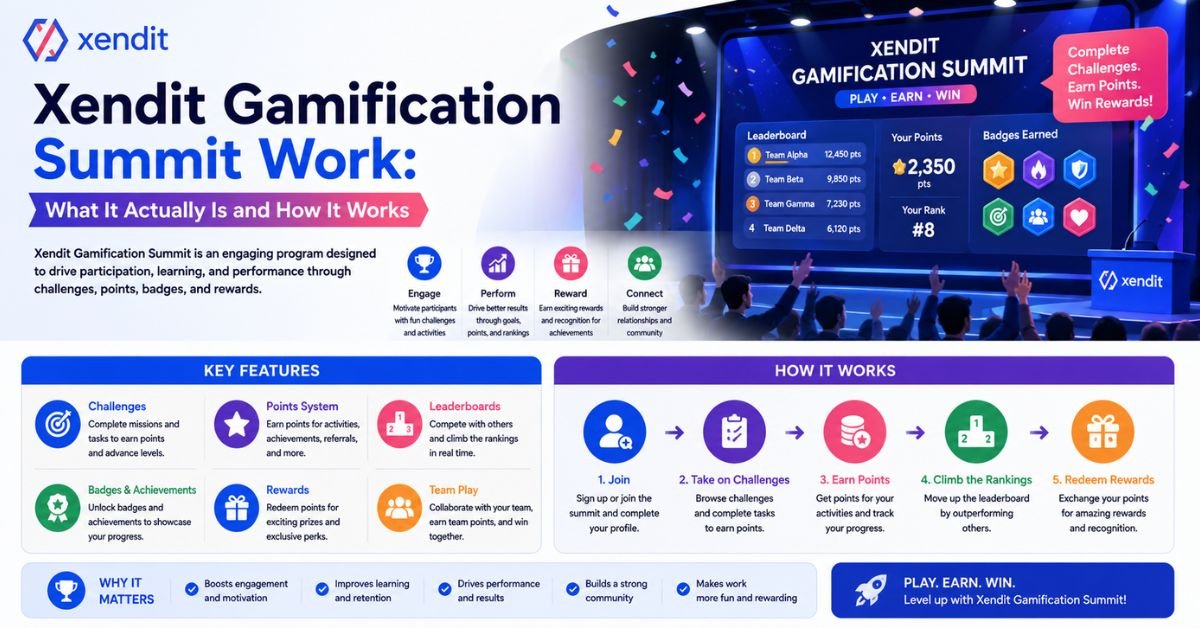
Xendit Gamification Summit Work: What It Actually Is and How It Works
You’ve probably seen the phrase Xendit Gamification Summit Work online. It sounds exciting. It also sounds a little vague. Is it a real event? Is it an HR program? Or is it just a keyword that spread across blogs?
This guide gives you straight answers in easy English. You’ll learn what we can confirm about Xendit. You’ll see how workplace gamification really works. You’ll also get a simple method to check claims before you trust them.
What Is Xendit Gamification Summit Work?
Xendit Work GamificationSummit is a phrase that appears across many blogs and article sites. It mixes a company name with the words “gamification” and “summit.” Most pages describe it as a program or event about gamification in the workplace. You’ll also see odd spellings such as “gamificationsummit work xendit” and “gamificationsummit xendit work.” These are search variations. They aren’t official names.
Most pages say the same thing. They claim it uses points, badges, quests, and dashboards to lift morale. They describe employee gamification programs that reward teamwork and learning. Those ideas are real and useful. The open question is whether Xendit itself runs such a program. The next section tackles that question head on.
Is Xendit Gamification Summit an Official Program?
Here’s the direct answer. We couldn’t find an official announcement, press release, or event page for the Xendit Gamification Summit on Xendit’s own channels. We also found no agenda, speaker list, or ticket page tied to a verified source. That’s a strong warning sign. Real summits leave a clear paper trail.
The sources that do mention it contradict each other. One page calls it an annual event organized by Xendit. Another describes “Work Xendit” as a gamification technology leader. Those two claims can’t both be true. So treat the topic as unverified. Enjoy the ideas about gamification in the workplace. Don’t treat the program as confirmed fact. pwpw
| Claim Type | What We Found | How to Treat It |
| Official announcement | None found on Xendit channels | Unconfirmed |
| Event dates and speakers | None from a verified source | Unconfirmed |
| Detailed success numbers | No primary data | Treat with caution |
| General gamification advice | Widely supported by research | Useful |
What Is Xendit and What Does the Company Do?
Xendit is a financial technology company. It helps businesses accept and send money online. Its home base is Southeast Asia. Indonesia and the Philippines are its best-known markets. You can read about it on the official Xendit website. The company works as a payment service provider. It does not sell HR software or gamification software for businesses as its core product.
Think of Xendit as the plumbing behind many online sales. Shoppers rarely see it. Yet it moves money every day for online stores, apps, and schools. That role matters for this topic. It shows why a payment company might support an event or rewards program. It does not show that the company runs a gamification summit.
Xendit’s Role in Digital Payments
Xendit offers Xendit payment solutions that let companies collect payments through cards, bank transfers, e-wallets, and QR codes. It also supports payouts. A business can send money to workers, sellers, or customers in bulk. These tools make digital payment processing faster and simpler. They also reduce manual work for finance teams. In short, Xendit answers one question well: how does money move safely between people and businesses?
How Xendit Payment Infrastructure Works
The flow is easy to picture. A customer chooses to pay. The Xendit payment gateway receives the request and checks it. The bank or e-wallet approves it. Then the business gets the funds. All of this runs on online payment infrastructure that handles security and speed behind the scenes. Companies connect to it through payment API integration. That means their website or app talks to Xendit automatically. These business payment solutions save time and cut errors.
Why Is There Confusion About Xendit GamificationSummit Work?
Confusion grows when many sites copy one idea. A phrase appears on ten pages. Then it appears on fifty. Soon it looks like common knowledge. That’s how a keyword can feel like a real program. Search engines also reward long guides. So writers keep producing similar articles.
The wording adds to the mess. It joins three separate things: a payments company, a summit, and employee gamification programs. Readers naturally assume they belong together. They might not. Let’s look at the three main sources of confusion.
Conflicting Claims Across Websites
Different pages tell different stories. Some say it is an annual summit. Others say it is an internal staff program. A few treat it as a software brand. When claims clash like this, you can’t trust any of them without a primary source. Contradiction is the first red flag.
Workplace Gamification vs. Gamified Payment Events
These are two different ideas. Workplace gamification uses game elements to motivate staff. A gamified payment event uses game-style steps to make buying or registering more fun. The table below shows the difference.
| Feature | Workplace Gamification | Gamified Payment Event |
| Main goal | Motivate employees | Boost sign-ups or sales |
| Typical users | Staff and teams | Attendees and customers |
| Key tools | Badges, quests, dashboards | Discounts, countdowns, rewards |
| Payment role | Optional, for rewards | Central, for checkout |
How to Verify Claims About Official Xendit Programs
Start with the source. Check Xendit’s website, newsroom, and verified social accounts. Look for dates, named speakers, and links to real registration pages. This is also the best way to learn how to verify official company programs. If you find nothing there, the claim isn’t confirmed. A quick check takes five minutes. It can save you from sharing a false story.
How Workplace Gamification Works
Workplace gamification adds game elements to everyday tasks. These elements include points, levels, badges, and shared goals. The idea is simple. People enjoy clear goals and quick feedback. Games deliver both. When a company applies these gamification mechanics to real work, tasks feel less dull. This works through behavioral reinforcement. People repeat actions that bring recognition or progress.
Good design matters most. A smart points and badges system rewards useful actions, not empty clicks. Strong employee engagement platforms let managers set goals and track results. They also make progress visible to everyone. Many modern employee productivity tools now include these features. The table below lists the core pieces.
| Mechanic | What It Does | Example |
| Points | Shows effort | Points for finishing a course |
| Badges | Celebrates milestones | Badge for ten helped customers |
| Quests | Links tasks to a story | A month-long onboarding quest |
| Leaderboards | Shows ranking | Weekly team standings |
| Levels | Shows growth | Junior to expert tiers |
Daily Challenges and Achievement Rewards
Daily challenges break big goals into small wins. A support agent might earn a badge for quick, helpful replies. These achievement-based rewards give people a reason to feel proud each day. Small wins build momentum. They also keep motivation from fading between yearly reviews.
Progress Tracking and Recognition Systems
People stay motivated when they can see growth. Progress tracking systems show completed tasks, learning steps, and milestones on one screen. Pair them with employee recognition systems and the effect doubles. A public thank-you from a manager means more than a silent point. Together these tools support employee performance management in a friendly way.
Team Quests and Collaborative Activities
Shared goals pull people together. A team-based challenge might ask three departments to cut delivery delays by ten percent. Everyone wins or nobody does. This builds trust across teams. It also strengthens workplace collaboration strategies and creates a more collaborative work environment.
See Also: Pixelspinx com Review 2026: Features, Content, Safety, and Legitimacy
Leaderboards and Personalized Goals
Leaderboards and rankings can spark friendly energy. They can also add stress. So smart teams pair them with personalized employee challenges. Each person gets goals that fit their role and pace. Rankings then feel fair instead of harsh.
How Xendit Could Support Gamified Workplace or Event Experiences

This section looks at what is possible. It isn’t a list of confirmed features. A payment company can power the money side of a gamified event registration or a rewards plan. It can’t replace a full gamification software for businesses platform. Think of Xendit as one piece in a larger toolkit.
A company would still need a separate tool for points, badges, and dashboards. Then it would connect that tool to a payment system. That link is where Xendit payment solutions could help. It’s also the best answer to the question about the difference between payment platforms and gamification software. One moves money. The other drives behavior.
Payment Integration for Event Registration
Imagine a company summit with paid tickets. Attendees could unlock early-bird prices by completing short quizzes. That’s gamified event registration. A payment integration for events then handles the checkout. Cards, e-wallets, and bank transfers could all work in one flow. It makes digital payments for event registration smooth and quick.
Digital Payments for Rewards and Incentives
Rewards need a delivery method. A business could send small cash prizes or e-wallet credits to winners. These digital rewards and incentives arrive fast and need little paperwork. They also support workplace incentive programs across many locations. Payout tools make this practical for large teams.
Connecting Payment Systems With Engagement Platforms
Software tools talk through APIs. An employee engagement platform can trigger a payout when someone earns a reward. The payment system then sends it automatically. This payment API integration removes manual steps. It also keeps records clean for finance teams. It’s a smart way to link workplace engagement technology with digital payment infrastructure.
Benefits of Workplace Gamification When Designed Effectively
Good design is the key. When a program fits the team’s real work, results can be strong. People feel seen. They learn faster. They also enjoy tasks they once dreaded. These gains support workplace engagement strategies that last longer than a one-off party or bonus.
The benefits reach beyond mood. Better engagement often leads to better employee retention strategies. Happy people stay longer. Teams also communicate more. Many managers use employee motivation techniques like these to lift results in hybrid and remote teams. The table below sums it up.
| Benefit | Why It Matters |
| Higher engagement | People care more about their work |
| Faster learning | Training feels active, not passive |
| Stronger teamwork | Shared goals reduce silos |
| Quicker feedback | Staff improve sooner |
Improving Employee Engagement and Motivation
Frequent recognition lifts morale. People feel their effort counts. That raises employee participation rates and makes employee rewards systems more effective. You can see it in simple signs. More people join meetings. More people share ideas. If you’re wondering how to increase employee engagement at work, start with fast, fair recognition.
Making Training and Onboarding More Interactive
Gamified employee training turns lessons into short missions. New hires earn points for finishing modules. They unlock levels as they learn. This improves the employee onboarding experience and supports workplace learning and development. People remember more when they play an active part.
Encouraging Teamwork and Collaboration
Shared quests help teams talk. A sales rep and a support agent might work on one goal together. They learn each other’s challenges. That builds trust. It also boosts the benefits of gamification for employees who rarely meet.
Providing Faster Feedback and Visible Progress
Yearly reviews feel slow. Live dashboards fix that. Employee feedback systems give instant signals about what’s working. People can adjust right away. Visible progress also keeps remote workers connected to the bigger mission.
See Also: WallPostMedia com Review 2026: Is It Legit, Safe, and Worth Using?
Challenges and Risks of Workplace Gamification
Gamification isn’t magic. Poorly built programs can harm morale. Some staff feel judged by every click. Others feel the games are childish. Leaders must watch for these gamification challenges and limitations early. Honest planning protects both people and results.
Most risks fall into four groups. They involve pressure, wrong targets, privacy, and lost passion. Each one is fixable. The table below shows common problems and simple fixes.
| Risk | Simple Fix |
| Leaderboard stress | Use team scores and private progress |
| Quantity over quality | Reward outcomes, not volume |
| Privacy worries | Be open about what you track |
| Lost passion | Mix recognition with meaningful work |
Competition, Leaderboard Stress, and Burnout
Public rankings can push people too hard. The risks of workplace leaderboards include anxiety and overwork. Teams that chase top spots may skip breaks. That hurts health and results. For employee burnout prevention, use team goals and personal bests instead of constant ranking. This is also the best answer to how to prevent gamification-related burnout.
Rewarding Quality Instead of Quantity
Counting only volume invites shortcuts. As the saying goes, “When a measure becomes a target, it ceases to be a good measure.” Picture a call center that rewards call count. Agents rush calls. Customers leave unhappy. A better plan rewards solved problems and positive feedback.
Employee Privacy and Fairness Concerns
Tracking raises real questions. Data privacy in the workplace matters. Staff deserve to know what’s collected and why. These ethical concerns in employee monitoring grow when scoring feels hidden or unfair. Clear rules, simple language, and equal treatment across roles build trust.
Maintaining Intrinsic Motivation
Intrinsic motivation means doing work because it feels meaningful. Extrinsic motivation means working for prizes. Too many prizes can weaken the first kind. Researchers behind self-determination theory have studied this for decades. So keep rewards modest. Pair them with purpose, learning, and autonomy.
How to Build an Effective Workplace Gamification Strategy

A strong plan starts small. Pick one team and one goal. Test it for a month. Then adjust. This keeps risk low. It also shows quickly what works. Good workplace engagement strategies grow from real feedback, not guesswork.
Next, match the tools to the goal. Some firms need full gamification software for businesses. Others only need a simple spreadsheet and a weekly shout-out. That’s true for gamification software for small businesses too. Start with what you can manage. Upgrade when the habit sticks. The table below gives a simple roadmap.
| Step | Action |
| 1 | Set one clear goal |
| 2 | Pick fair rewards |
| 3 | Launch a small pilot |
| 4 | Track key numbers |
| 5 | Gather feedback and refine |
Set Clear and Measurable Goals
Vague goals create vague results. Tie each game element to a business aim. For example, aim to raise course completion from 60 to 80 percent. Clear numbers make gamification program evaluation much easier later.
Choose Meaningful Rewards and Incentives
Not every reward needs cash. Public praise, learning budgets, and extra time off often mean more. Well-built performance-based rewards feel earned and fair. Mix small prizes with real recognition. This keeps workplace incentive programs healthy over time.
Encourage Collaboration Over Excessive Competition
Use shared scores and team milestones. When everyone wins together, people help each other. That’s one of the best gamification strategies for remote teams. It also makes the culture warmer.
Measure Participation and Business Outcomes
Watch both activity and results. Track sign-ups, completion, and customer scores. Strong employee performance tracking links effort to outcomes. Numbers tell you if the program helps or only entertains.
Review Employee Feedback and Potential Side Effects
Ask people how it feels. Short surveys work well. Look for stress, confusion, or unfair scoring. Then fix problems fast. Listening keeps trust high and the program alive.
The Role of AI and Personalization in Workplace Gamification
Artificial intelligence in HR can tailor challenges to each person. It can study skills, pace, and goals. Then it suggests tasks that fit. This is the idea behind AI-powered employee engagement. Engineers might get coding puzzles. Sales staff might get client-skill missions. Personal fit keeps people interested.
Still, use AI with care. Models can misread data or show bias. They also need personal information to work. That brings back data privacy in the workplace concerns. Test AI claims before you trust them. Keep humans in charge of final decisions. Technology should support people, not replace judgment.
How to Measure the Success of a Gamification Program
Points alone don’t prove success. A busy dashboard can hide weak results. So use a mix of people numbers and business numbers. Good gamification program evaluation looks at behavior, feelings, and money. That answers the common question how to measure employee engagement.
Pick a few employee engagement metrics and track them monthly. Compare them with a baseline from before the launch. Share the results openly. Teams trust programs that show honest numbers. The table below lists useful measures.
| Area | Example Metric |
| Engagement | Active users per week |
| Learning | Training completion rate |
| People | Satisfaction score, turnover |
| Business | Output quality, ROI |
Employee Participation and Engagement Rates
Start with who joins and who stays. Track active users and repeat visits. Low employee participation rates often signal poor design. High early numbers that drop fast suggest a short-lived novelty.
Productivity and Training Completion
Link activity to real output. Productivity measurement should look at quality, speed, and error rates. Check training completion too. A program that lifts both is doing its job. This also answers whether gamification can improve employee productivity. It can, but only when the design is sound.
Employee Satisfaction and Retention
Use short pulse surveys. Ask if recognition feels fair. Then watch turnover trends. Better satisfaction often leads to stronger employee retention strategies. Lower exits save hiring costs.
Performance Metrics and Return on Investment
Compare program costs with gains. Count software fees, rewards, and staff time. Then count saved hiring costs and added output. A simple return on investment (ROI) check shows if the program pays off. If it doesn’t, adjust or stop.
See Also: JoinCRS com Guide 2026: How It Works, Features, Safety, and Benefits
Common Misconceptions About Xendit GamificationSummit Work
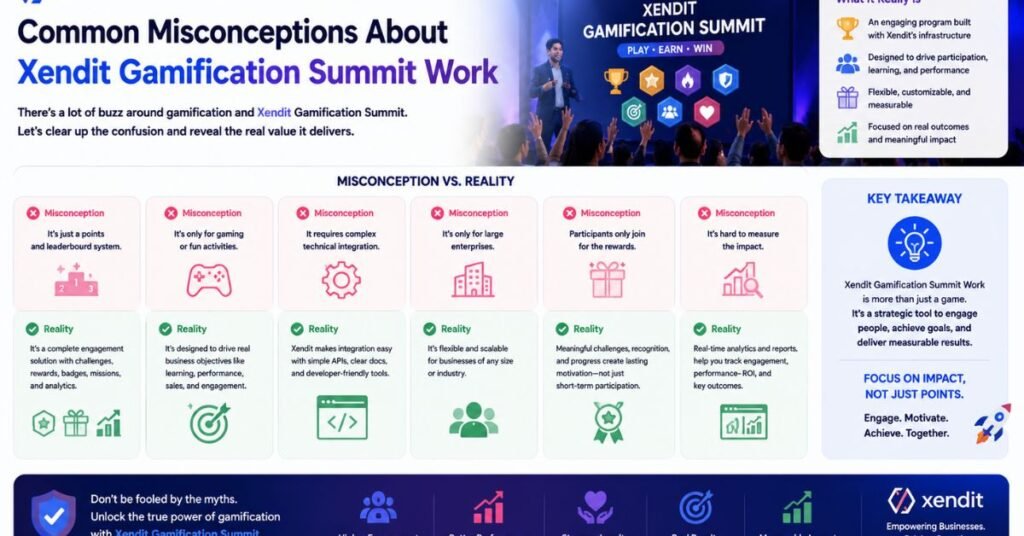
Myths spread easily when many pages repeat them. Readers see the same phrase again and again. They assume it must be true. Let’s clear up four common mix-ups. Each one helps you think more clearly about the topic.
The table gives a fast summary. The sections below explain each point.
| Myth | Reality |
| Many articles prove it exists | Copies don’t equal a source |
| Payments mean gamification software | They are different products |
| Gamification always lifts output | Results depend on design |
| Cash is required | Recognition often works better |
Does Repeated Online Coverage Prove a Program Exists?
No, it doesn’t. Many sites copy each other. A phrase can echo across dozens of pages without any real origin. Only a primary source can confirm a program. That means the company’s own site or a verified announcement.
Does Payment Infrastructure Mean Xendit Offers Gamification Software?
No. A payment service provider moves money. Gamification software tracks behavior and rewards. Some companies offer both. Many don’t. Check the list of official Xendit services before assuming it covers engagement tools.
Does Gamification Always Improve Productivity?
No. Results depend on goals, culture, and fairness. A badly designed game can lower morale. A well-designed one can raise it. Always test on a small group first.
Are Cash Rewards Necessary for Employee Engagement?
No. Many people value growth, praise, and freedom more than money. Cash can help in some cases. It rarely works alone. A strong mix of recognition and meaningful work usually wins.
How to Evaluate Claims About Xendit Gamification Summit
Use a simple four-step test. First, find the primary source. Check Xendit’s website and verified accounts. Second, check dates. Real events list clear dates and places. Third, look for named people. Real summits show speakers and organizers with traceable profiles. Fourth, compare several independent sources. If they all trace back to one blog, the claim is weak.
Also watch for warning signs. Vague results, copied wording, and missing authors all signal low quality. Overblown promises are another clue. If a page sounds too perfect, pause. The table below works as a quick checklist.
| Check | Good Sign | Warning Sign |
| Source | Official company page | Anonymous blog |
| Dates | Clear and specific | Missing or vague |
| People | Named and verifiable | No names |
| Data | Linked to a report | No evidence |
Frequently Asked Questions
What Is Xendit Gamification Summit at Work?
Xendit Gamification Summit at Work is an online phrase linked to workplace gamification and the company Xendit. Many pages describe it as an engagement program or event. We couldn’t confirm it through official channels. So treat it as an unverified topic while still using the gamification ideas behind it.
Is Xendit Work GamificationSummit an Official Xendit Initiative?
No official source confirms it. Xendit’s own channels show no clear announcement, agenda, or registration page. Other sites make strong claims without proof. Check Xendit’s website and verified social accounts before you rely on any version of the story.
Does Xendit Offer Workplace Gamification Software?
Xendit is known for payment services, not HR engagement tools. Its strength lies in digital payment infrastructure and business payment solutions. A company could connect Xendit to a separate gamification platform. That’s different from Xendit selling the platform itself.
Can Workplace Gamification Improve Employee Productivity?
Yes, when it’s designed well. Clear goals, fair rewards, and fast feedback help people focus. Poor design can backfire. Measure results and adjust. Productivity gains come from better habits, not from points alone.
How Can Small Businesses Introduce Gamification?
Start simple. Use a shared board, weekly shout-outs, and small team challenges. You don’t need costly software. Many gamification software for small businesses options also exist when you’re ready. Test with one team first and ask for honest feedback.
Can Xendit Be Used for Payments at Gamified Events?
Yes, in principle. A Xendit payment gateway setup can handle tickets, fees, and payouts for an event. That supports payment integration for gamified events. The game mechanics would still come from a different tool or from the event organizer.
What Should You Check Before Trusting Information About Xendit GamificationSummit?
Look for a primary source first. Check the company’s site, dates, named speakers, and real registration links. Compare several independent sources. If every page copies the same text, be careful. A few minutes of checking protects your reputation.
Conclusion
Here’s the honest summary. The Xendit Gamification Summit has no confirmed official source. Many pages repeat the same story with different details. So treat it with caution. Xendit itself is a real payment service provider with solid Xendit payment solutions. It is not clearly a gamification software company.
The good news is that the ideas behind the phrase are valuable. Workplace gamification can lift motivation, speed up learning, and build teamwork when you design it with care. Set clear goals. Reward quality. Protect privacy. Measure results. And always verify a claim before you share it. That habit will serve you far beyond this one topic.