
Spiritualhubz.com About: Website Overview, Topics, Features, and What You Should Know
You type a site name into a search bar. Then you add the word “about.” That small habit says a lot. You want to know who runs the place, what it covers, and whether you can trust it. The search for Spiritualhubz.com about follows the same pattern. This guide gives you a clear SpiritualHubz.com overview so you can judge the site for yourself.
Life moves fast. Work, bills, and screens leave little room to breathe. Many people turn to spirituality for answers. Others want simple mindfulness practices or help with finding life purpose. A good site can guide your spiritual exploration with care. A weak one can mislead you. The sections below show you how to tell the difference.
What Is Spiritualhubz.com?
SpiritualHubz.com is a website built around spiritual topics. Its name and focus point to readers who love meanings, symbols, dreams, and inner awareness. Think of it as a small library of ideas. You pick a shelf and start reading. The site speaks to people who want spiritual resources in plain language. Many visitors are beginners. They don’t need a philosophy degree. They need a curious mind and a little time.
People search Spiritualhubz com about for different reasons. Some want a fast summary. Others want to check trust signals before they read more. A few want to know who stands behind the pages. These are smart questions. Any site that touches spiritual beliefs should welcome them. Keep one point in mind, though. An overview is not a verification. Ownership, pricing, and policies deserve a check on the live site.
What Does Spiritualhubz.com Offer?
The site centers on five content areas. Each one serves a different kind of reader. Some people come for quick meanings. Others come for deeper spiritual guidance and personal development. The mix suits casual browsing as well as slow, thoughtful study. You can hop between topics or follow one theme for weeks.
The table below shows how these areas fit together. Notice that each area links to self-discovery in some way. Symbols, dreams, and tattoos all invite you to ask what something means to you. That question sits at the heart of spiritual growth. It also explains why these topics stay popular across many cultures.
| Content Area | What You May Find | Who Benefits Most |
| Spiritual meanings | Symbols, signs, colors, numbers | Curious beginners |
| Dream interpretations | Common dream themes and ideas | Reflective readers |
| Tattoo symbolism | Design meanings and cultural roots | Tattoo planners |
| Mystical insights | Reflective, guidance-style posts | Seekers of spiritual guidance |
| Mindfulness and growth | Calm habits and meditation practices | Busy, stressed readers |
Spiritual Meanings and Symbolism
Symbols speak without words. A feather, a butterfly, or a repeating number can feel like a quiet message. Articles on this theme explain what such signs have meant in different cultures. They also show how one symbol can carry many readings. A butterfly may suggest personal transformation to one reader and simple beauty to another. Good symbolism content respects that range. It offers ideas without forcing a single answer, and it invites you to link each sign with your own personal values.
See Also: TheLifestyleEdge com Review 2026: Features, Content Quality, Legitimacy & What You Should Know
Dream Interpretations and Their Meanings
Dreams fascinate nearly everyone. You may wake from a falling dream with your heart racing. Dream articles try to explain such moments through common themes like water, flying, or lost keys. Cultural and spiritual traditions often read these images as messages. Modern psychology tends to see them as the mind sorting memories and feelings. Both views can fuel self-reflection. Treat any meaning as a prompt for thought and not as a prediction. Your own life context always matters most.
Tattoo Symbolism and Spiritual Significance
A tattoo stays with you for life. That makes its meaning matter. Pages on this topic explore designs such as the lotus, the mandala, the compass, and the tree of life. Many of these symbols come from religious traditions and ancient art. Learning their roots helps you avoid careless choices. It also shows respect for the cultures behind them. Before you ink anything, ask what the symbol means to you. Then check its history through more than one reliable information source.
Mystical Insights and Spiritual Guidance
Some readers want more than definitions. They want a gentle push toward clarity. Mystical and guidance-style posts try to offer that. They may discuss intuition, energy, or life lessons in a reflective tone. Read them as food for thought. They are not rules or guarantees. Strong spiritual guidance encourages independent thinking and never pressures you. If a post promises certain outcomes, slow down. Compare it with other online spiritual resources before you act.
Mindfulness, Meditation, and Personal Growth
This area covers calm, practical habits. You may meet mindful breathing, mindful walking, and short daily meditation ideas. These mindfulness practices fit into small gaps in your day. Five quiet minutes can steady a rushed morning. Over time such pauses support stress management and emotional balance. They also build present moment awareness. The best advice here stays simple and realistic. Nobody needs hours of silence to begin a personal growth journey.
See Also: SpicyChat AI Review 2026: Features, Pricing, Safety, Memory & Best Alternatives
Understanding the Main Topics Covered on Spiritualhubz.com
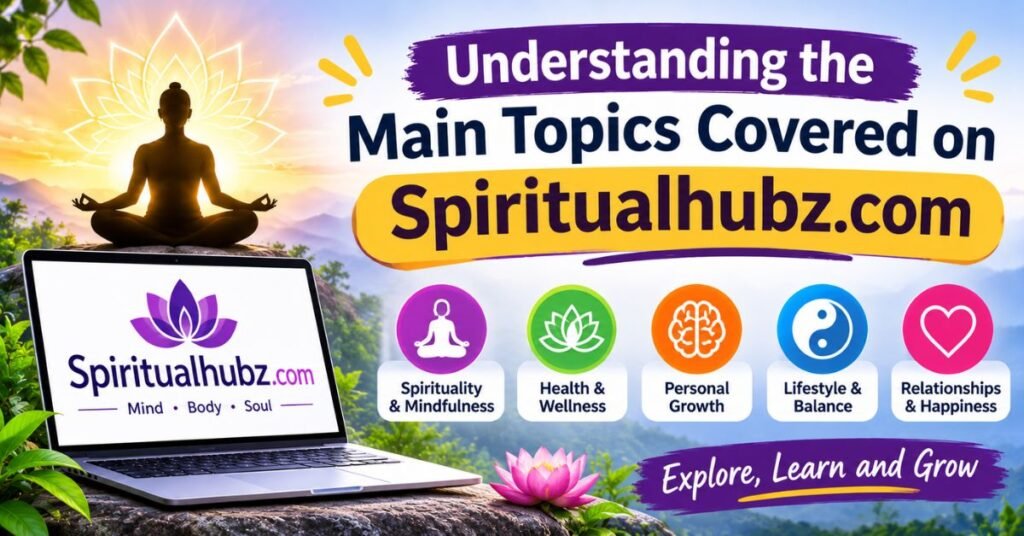
Four big ideas run through the site. They are everyday symbols, dream meanings, tattoo significance, and inner peace. On the surface they look unrelated. Underneath they share one root. Each helps you read your own life with more care. That is why readers worldwide find them appealing. The themes cross borders and languages with ease.
Think of these topics as four doors into one house. Each door opens to the same hall of self-awareness. You can enter through a dream or through a tattoo design. Either way you end up asking better questions about yourself. Such questions fuel spiritual development and understanding spirituality in a down-to-earth way. They also keep your reading active and not passive.
Exploring Spiritual Symbols in Everyday Life
Symbols hide in plain sight. A white dove on a card, a rising sun on a mug, or a tree in a park can all spark thought. Everyday spirituality means noticing such things and pausing for a moment. You do not need a temple or a retreat. You need a little attention. When you spot a symbol, ask what it stirs in you. That habit turns ordinary scenes into small lessons in spiritual awareness.
Understanding Dreams and Their Interpretations
Dream study works best with a notebook. Jot down images, feelings, and people the moment you wake. Patterns often appear after a few weeks. You may notice that stress dreams spike before big deadlines. That insight alone can help your mental and emotional well-being. Dream guides offer starting points for this work. Use them as maps and not verdicts. If your dreams disturb your sleep for long periods, consider professional mental health support.
Discovering the Meaning Behind Spiritual Tattoos
Spiritual tattoos blend art with belief. Each line and curve can hold a story. A mandala may stand for wholeness. An anchor may stand for steadiness during storms. Before you commit, study the symbol’s origin. Some designs hold sacred value in specific cultures. Respect matters here. Talk with a skilled artist and read from trusted voices. Choose a design that matches your own personal philosophy and not just a passing trend.
Building Self-Awareness and Inner Peace
Self-awareness means seeing your thoughts, moods, and habits clearly. Inner peace grows from that clarity. It does not mean a life without trouble. It means you meet trouble with a steadier mind. The old line from Socrates still fits: “The unexamined life is not worth living.” Simple self-awareness techniques such as journaling and quiet contemplation make this practical. Even ten honest minutes a day can shift how you handle hard moments.
What Is the Purpose and Mission of Spiritualhubz.com?
The apparent aim is easy to read from the site’s themes. It wants to make spiritual ideas simple and approachable. Many people feel lost among heavy terms and lofty claims. A friendly guide can lower that barrier. The site seems to target readers who want meaningful living without jargon. It leans on short topics, clear meanings, and gentle prompts for self-discovery.
A mission is only as good as its delivery. Readers should expect clarity, respect, and honesty. They should expect content that supports critical thinking and does not replace it. For a precise mission statement, check the site’s own About page. Quote that wording if you cite it. Never assume a purpose from the name alone. The Spiritualhubz com about page, when available, is the best first stop.
How to Use Spiritualhubz.com Effectively
A plan makes any website more useful. Start with one clear question. It might be “What does this symbol mean?” or “How do I start meditating?” Then browse the matching topic. Read two or three posts before you decide anything. Compare what you find with outside spiritual resources. This habit protects you from one-sided views and builds independent thinking.
Next, slow down. Spiritual content rewards reflection more than speed. Read a post and then close the tab for a while. Ask how the ideas touch your own life. Write a few lines in a notebook. This small step turns reading into spiritual growth. It also helps you build positive habits one page at a time.
Finding Spiritual Meanings and Interpretations
Search with specific words. A phrase such as “butterfly spiritual meaning” beats a vague term like “signs.” Scan the headings first and then read the sections that fit your question. Notice whether the post names cultures or traditions behind a meaning. That detail signals care. Then test the meaning against another trusted source. If both agree on the core idea, you can hold it with more confidence. If they differ, treat the topic as open and personal.
Exploring Different Categories
Browsing by category reveals the site’s range. You might start with dreams and drift into mindfulness or tattoo symbolism. Follow related links when a topic grabs you. Keep notes on themes that return again and again. Those themes often point to what you need right now. A reader who keeps landing on calm-living posts may be craving stress management. That clue helps you choose spiritual practices that fit your life.
Applying Spiritual Insights to Everyday Life
Reading means little without action. Consider a sample reader named Daniel. He works long hours and feels frazzled. He reads about mindful listening and tries it in one meeting a day. He gives full attention and holds back his urge to interrupt. After three weeks he notices calmer talks and fewer tense moments. This is an illustration and not a study. It shows how one small change can feed healthy communication and a meaningful daily routine.
See Also: The Serpent Rogue Competitive Edge: Complete Strategy Guide to Mastering the Game
Who Owns Spiritualhubz.com? Team and Website Transparency

Trust grows from openness. A transparent site tells you who writes, who owns, and how to reach them. Look for an About page, a contact form, and an author byline. A privacy policy and editorial note add more comfort. These pieces show a real team stands behind the words. Their absence does not prove bad intent. Yet it does leave you with unanswered questions.
Do not guess at ownership. Verify it. Public domain lookup tools such as ICANN Lookup can show registration data when it is available. Many owners hide personal details for privacy. That is normal and legal. So if the lookup shows little, rely on the site’s own disclosures. Ownership details are not confirmed here. The table below shows where to look.
| Transparency Signal | Where to Look | Why It Matters |
| About page | Menu or footer | Shows purpose and background |
| Author names | Under post titles | Supports author expertise checks |
| Contact details | Contact page | Lets you ask questions |
| Privacy policy | Footer | Explains data use |
| Domain record | ICANN Lookup | Shows registration facts, if public |
Is Spiritualhubz.com Free to Use?
Most content sites let you read without paying. They earn money through ads or affiliate links. That model keeps articles open to everyone. It may also place banners or product links near the text. Neither is a problem by itself. Honest sites label such items clearly. If you see a sign-up form or a paywall, read it before you click.
Treat any payment request with extra care. Check the price, the refund terms, and the cancellation steps. Look for a secure checkout page and clear contact details. Never share card data on a page that feels rushed or vague. Free reading is one thing. Paid courses or readings are another. Weigh them against your budget and your spiritual well-being needs. Pricing details should be confirmed on the live site.
Is Spiritualhubz.com Safe and Legit?
Safety checks take only a few minutes. Start with the basics. Does the address begin with “https”? Does the site load without strange pop-ups? Can you find a privacy policy and contact details? Do the posts avoid wild promises? A “yes” to most of these is a good sign. No review can replace your own look. Spend five minutes on the pages before you trust any claim.
Content quality matters as much as technical safety. Spiritual topics touch deep feelings. That makes readers more open to pressure. Watch for fear tactics, urgent offers, or pushy sales language. Healthy sites support critical thinking and respect your choices. They also remind you that professional mental health support has its place. The four checks below help you judge the content with a calm eye.
Checking the Website’s Sources and References
Good pages show where ideas come from. They may name a tradition, a book, or a study. Click the links and see if they lead somewhere real. For health-related claims, compare them with trusted bodies such as the National Center for Complementary and Integrative Health or the Mayo Clinic’s meditation guide. Posts that cite sources give you reliable information. Posts that cite nothing ask for blind trust. Prefer the first kind.
Evaluating Author Information and Expertise
Names build accountability. An author bio can show training, lived experience, or a clear point of view. Look for it near the post or on a team page. Author expertise does not require a degree in every case. A meditation teacher with years of practice can offer real value. Still, claims about health or mental conditions need proper credentials. If no author appears at all, weigh the content with extra care and check it against other sources.
Understanding Spiritual Beliefs vs. Scientific Evidence
Beliefs and evidence answer different questions. Spiritual beliefs speak to meaning, faith, and personal experience. Scientific evidence speaks to what tests and studies can measure. Both can be useful. Trouble starts when a post blurs them. A dream symbol is a cultural idea. A claim that a practice cures disease needs scientific evidence. Keep the two apart in your mind. Enjoy the meaning but demand proof for medical claims.
Identifying Misleading Spiritual Claims
Red flags are easy to learn. Be careful with guarantees such as “This ritual will make you rich.” Be careful with cure claims and with fear-based warnings. Watch for offers that expire in minutes. Real spiritual advice stays humble. It says “may” and “can” instead of “always” and “never.” If a page tells you to stop medical care or hand over money fast, step away. Trust your gut and ask a friend for a second opinion.
See Also: Antarvafna: Meaning, Benefits, and How to Practice Inner Awareness
Spirituality, Religion, and Personal Growth: Understanding the Difference
Spirituality is a personal search for meaning, peace, and connection. Religion usually means an organized system of faith with shared rituals and teachings. The two often overlap. A person can pray in a temple and also practice quiet reflection at home. Another person may feel deeply spiritual with no formal faith at all. Neither path is better. Each can support personal development and spiritual well-being.
Respect for differences is vital. A fair site never treats one view as the only truth. It explains religious traditions with care and credits their sources. It also honors personal beliefs that sit outside any tradition. Your personal growth journey belongs to you. The table below sums up how the three ideas relate.
| Concept | Core Idea | Typical Practices |
| Spirituality | Personal search for meaning | Reflection, nature, meditation |
| Religion | Shared faith and teachings | Worship, prayer, sacred texts |
| Personal growth | Ongoing self-improvement | Journaling, learning, healthy communication |
Benefits of Exploring Spiritual Content for Personal Development
Spiritual reading can offer real gifts when you use it wisely. It can spark curiosity and calm a busy mind. It can also nudge you toward kinder habits. The gains tend to be quiet and steady. You may feel less rushed or more patient with people. These shifts support mental and emotional well-being over time. They are not magic. They grow from repeated small choices.
Honest limits matter too. Spiritual content cannot replace a doctor or therapist. It cannot fix money problems or unsafe situations by itself. Use it as one tool among many. Pair it with community support, good sleep, and healthy lifestyle habits. That mix gives you a stronger base for conscious living. The four benefits below show how this works in practice.
Improving Self-Awareness and Mindfulness
Mindfulness teaches you to notice. You see a tense jaw, a racing thought, or a sudden flash of anger. That moment of noticing gives you a choice. You can breathe and respond instead of reacting at once. The Mayo Clinic notes that meditation may help people manage stress. Start with mindful breathing for two minutes. Add mindful walking later. Over weeks your emotional awareness and emotional intelligence can sharpen.
Finding Meaning and Emotional Balance
Meaning acts like a compass. It helps you pick what deserves your energy. When you link daily actions to personal values, effort feels lighter. You also handle setbacks with more calm. That is emotional resilience at work. Emotional balance does not erase sadness or anger. It lets you feel them without being swept away. Set personal boundaries too. Kindness works best when it includes the right to say no.
Developing Gratitude and Positive Thinking
Gratitude shifts your focus toward what already works. Try naming three good moments each evening. They can be tiny, like warm tea or a friendly text. This habit trains your attention over time. Pair it with acceptance. Accepting a hard fact lets you plan your next move. Gratitude and acceptance do not deny pain. They make room for hope beside it. Real positive thinking stays honest and grounded.
Building a More Meaningful Daily Routine
Routine turns good intentions into habits. A meaningful daily routine can be short. Pick a calm start, a mid-day pause, and an evening review. The schedule below shows one gentle example. Adjust the times to fit your life. Missing a day is fine. The goal is steady care for your mind-body connection, not perfection.
| Time of Day | Small Practic | Benefit |
| Morning | Set one intention | Clear focus |
| Midday | Three slow breaths | Lower tension |
| Evening | Daily reflection and journaling | Better self-reflection |
Spiritualhubz.com vs. Other Spiritual Websites
Spiritual websites come in many styles. Some are academic and cite old texts in detail. Others are personal blogs full of stories. A few sell courses or readings. SpiritualHubz.com appears to sit in the accessible, topic-driven group. It favors short meanings and easy reading. That suits beginners well. Experts may want more depth.
Compare any site on four points. Check its focus, depth, openness, and ease of use. The table below gives a simple framework. It uses general site types and not named rivals. Fill it in as you browse. The result will show you which style fits your needs.
| Feature | Topic-Driven Site | Academic Site | Personal Blog |
| Reading level | Easy | Advanced | Varies |
| Source citations | Varies | Strong | Often limited |
| Best for | Quick meanings | Deep study | Personal stories |
| Author expertise | Check each page | Usually stated | Based on experience |
Pros and Cons of Spiritualhubz.com
Every site has strengths and gaps. On the plus side, the topics feel familiar and inviting. The language aims to be clear. The range, from symbols to mindful living, gives you many starting points. Readers who want gentle spiritual awareness may enjoy the pace. Short pieces also suit busy days.
There are cautions as well. Interpretations are personal and can differ across cultures. Source details may vary from post to post. Ownership and team information should be confirmed. Readers should also keep critical thinking switched on. Use the table to weigh both sides before you decide how much to rely on the site.
| Pros | Cons |
| Easy, beginner-friendly topics | Meanings are personal and not universal |
| Wide range of themes | Source depth may vary |
| Useful prompts for self-discovery | Ownership details need checking |
| Fits short reading breaks | Not a substitute for professional mental health support |
Smart Tips for Beginners Exploring Spiritual Content Online
Start small and stay curious. Read one topic a day. Write down one idea that resonated with you. Compare it with a second source. Choose one tiny practice, such as mindful listening during a chat. Keep it for a week before you add more. This slow pace builds positive habits that last. It also protects you from overload.
Protect yourself as you go. Never share private data with a site you cannot verify. Avoid paying for big promises. Keep your independent thinking alive and question bold claims. Lean on human connection by talking with friends or groups you trust. Seek professional mental health support if sadness or worry lingers. Good spiritual practices work alongside real-world care and never replace it.
Frequently Asked Questions
What is Spiritualhubz.com about?
Spiritualhubz com about points to a website focused on spiritual topics. These include symbols, dream meanings, tattoo significance, guidance-style posts, and mindfulness with personal growth. It speaks mainly to curious beginners. The site works best as a starting point for spiritual exploration. Pair it with other reliable information whenever a topic matters to your health or big life choices.
Who owns Spiritualhubz.com?
Ownership is not confirmed here. The best sources are the site’s own About page, contact details, and any public domain record you can find through ICANN Lookup. Many owners keep personal data private. That is common. If no clear owner appears, read with extra care. Check each claim against scientific evidence or trusted religious traditions where relevant.
Is Spiritualhubz.com free to use?
Reading appears to be open on most content sites of this type. Still, confirm it on the live pages. Look for ads, affiliate links, or paid offers. Read the terms before you buy anything. A trustworthy site states prices and refund rules clearly. If a page hides costs or rushes you, pause and look elsewhere.
What topics does Spiritualhubz.com cover?
The main themes include spiritual meanings and symbolism, dream interpretations, tattoo symbolism, mystical insights, and mindfulness practices. Related ideas touch inner peace, gratitude, compassion, and meaningful living. Treat each topic as a doorway to self-awareness. Then use your own judgment about what fits your life and personal values.
Final Thoughts
Searching Spiritualhubz com about shows a healthy instinct. You want to know a site before you trust it. This guide covered what SpiritualHubz.com appears to offer and which topics it explores. It also showed how to check ownership, sources, and claims. Those steps matter on every spiritual site. They protect your time, your money, and your peace of mind.
Remember that spiritual growth is personal and slow. It grows through small acts like journaling, mindful breathing, and honest talks. Add integrity, humility, and responsibility to your daily choices. Lean on community support when life gets heavy. Let compassion and kindness guide your human relationships. Browse with an open heart and a sharp mind. Your own life purpose will take shape from there.