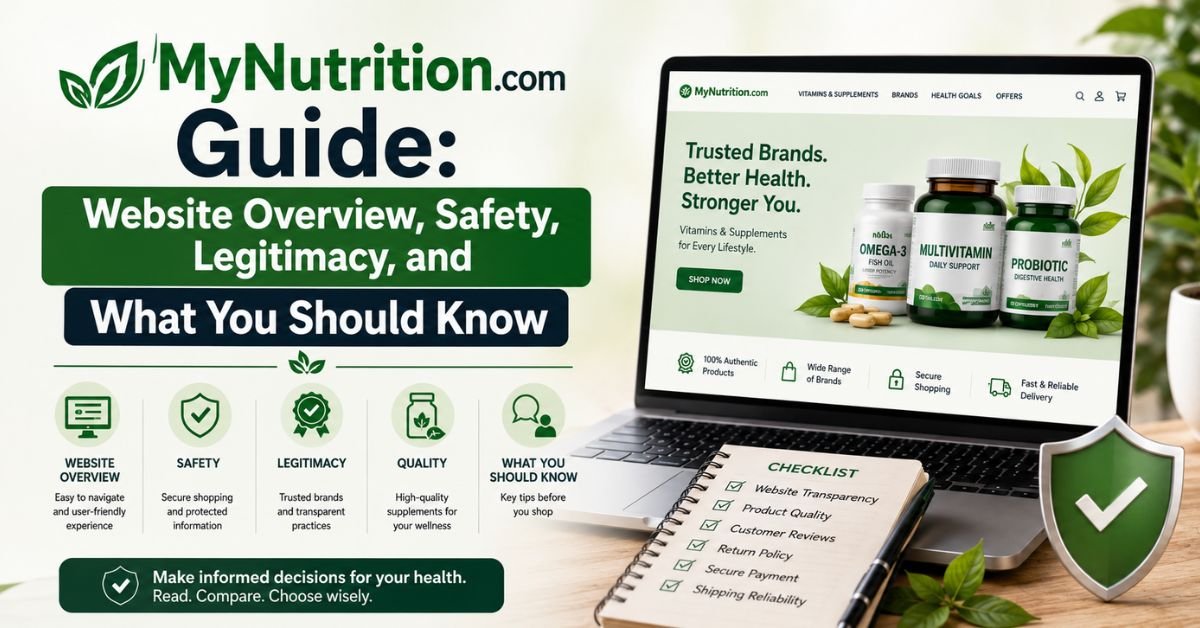
MyNutrition.com Guide: Website Overview, Safety, Legitimacy, and What You Should Know
You type a web address into your browser. Then you get a blank page, an error, or a totally different site. It happens a lot with MyNutrition.com.
This MyNutrition.com guide explains what the name means, whether it looks safe, and where to find reliable nutrition websites. You will also learn how food intake tracking works and how to start today.
What Is MyNutrition.com?
Many people search for MyNutrition.com and expect one clear answer. That is not what they find. Several services use the name “My Nutrition” or something close to it. They include a university learning site, a food tracking app, supplement shops, and private coaches. No single, obvious site stands out as the one true MyNutrition.com website.
This matters because a similar name can hide a very different service. So treat checking website ownership as your first rule. Look for an “About” page, a contact address, and a clear privacy policy. Do this before you share personal health information or pay for anything. The sections below show you how.
Understanding the MyNutrition.com Website
Think of a shop sign that matches three different stores in one city. You would not walk into the first door and hand over your credit card. The same care applies to the MyNutrition.com website overview. You can only confirm what you can actually see and check. If the page does not load, or shows no owner, you cannot confirm what it offers. Always judge the live site in front of you, not the name alone.
Is MyNutrition.com Connected to Washington State University?
Here is a fact that surprises many readers. Washington State University (WSU) built its own site called myNutrition. WSU Dining Services launched it in 2008. Annie Roe, the Dining Services registered dietitian, created it. You can read more on the WSU Dining Services website. However, no public proof links that project to the .com domain. Unless the owner shows a clear link, treat the two as separate.
What Is the Difference Between MyNutrition.com and WSU MyNutrition?
The two names look alike, but the details differ. The table below shows what you can and cannot confirm.
| Feature | MyNutrition.com | WSU myNutrition |
| Owner | Check before you use it | WSU Dining Services |
| Purpose | Unclear until verified | Campus nutrition education |
| Main tools | Verify on the live site | Calculators and NetNutrition |
| Audience | General public | Students and staff |
The WSU site covered nutrition basics and weekly challenges. It also offered a BMI calculator and tools for daily calorie needs. Users could also check target heart rate, healthy body weight, and physical activity. NetNutrition let people look up food nutrition facts for campus cafes.
Why MyNutrition.com May Not Be Accessible
Sometimes a site just won’t open. Many causes are harmless. A domain may have expired, or a server may be down. A DNS error can block you, and some regions block certain sites. An expired security certificate can also trigger a warning page. Readers in different countries may even see different results. Try another browser, switch networks, or clear your DNS cache before you worry.
See Also: TheLifestyleEdge com Review 2026: Features, Content Quality, Legitimacy & What You Should Know
MyNutrition.com Safety and Trustworthiness Analysis
Before you enter a building, you check the locks and the lights. Do the same with any site. Trust signals work like clues. They do not work like proof in a courtroom. One odd clue means little. A pile of them means you should slow down. This is the heart of how to identify reliable nutrition websites.
The five checks below cover the most useful clues. Keep in mind that results change over time. A site that looks weak today may improve next month. So always run the checks again yourself. Use live tools, and trust what you see on the day you visit.
What Independent Website Trust Reports Reveal
Free scam-checker tools scan a domain and give it a rating. Examples include ScamAdviser and Trustpilot for customer reviews. These tools look at domain age, hosting, and public ownership data. They also check reviews and technical setup. However, they use automated rules. They can miss new honest sites and sometimes flag harmless ones. Use two or three tools, and compare what they say.
Understanding the Domain’s Trust Score
A domain trust score is a quick estimate of risk. It is not a final verdict. A low score tells you to be careful. Yet new or small sites can score low simply because few people know them. A high score is also no guarantee. So read the score as one clue and keep digging.
What Hidden WHOIS Ownership Means
A WHOIS lookup shows who registered a domain. Many owners turn on WHOIS privacy to protect their name and address. That is common and often safe. However, hidden ownership plus a missing “About” page should make you pause. Honest businesses usually give you some way to reach them. For MyNutrition website ownership, check for a named person or company on the page itself.
Why Low Traffic and Limited Backlinks Matter
Backlinks are links from other sites that point to a page. Trusted sites usually collect many over time. Low traffic and few backlinks suggest a young or little-known site. That is not proof of fraud. It does mean fewer people have vetted the site. So lean on your own checks instead.
What Technical Errors and SSL Certificate Issues Indicate
Look at the padlock icon in your browser bar. It shows that the site uses an SSL certificate, which protects data in transit. If your browser shows a red warning, stop. Never enter card details or personal health information on that page. An expired certificate may be a simple mistake. Even so, the safe move is to leave until it is fixed. This is a key part of nutrition app privacy protection.
Is MyNutrition.com Legit or a Scam?
Odd does not mean criminal. A site can be broken, retired, or just poorly run. At the same time, real scams do exist. So use a simple three-part test. First, list what you can verify. Next, list the warning signs. Finally, add the context. This keeps you fair and safe.
Then decide for yourself. MyNutrition.com legitimacy depends on the live site on the day you visit. No article can promise a final answer forever. If the facts stay unclear, choose a source with clear ownership. That is the safest path.
What Could Be Verified About the Domain
You can check a few facts in minutes. Look up the registration date and the registrar. Check the hosting country and the SSL certificate status. Then see whether any real app or WSU link exists. A domain that is many years old with clear contact details looks stronger. A brand-new domain with hidden details looks weaker. Write down what you find, and compare it with the warning signs.
See Also: The Serpent Rogue Competitive Edge: Complete Strategy Guide to Mastering the Game
Warning Signs That Deserve Attention
Some signs deserve real attention. Hidden ownership and no contact details top the list. A missing privacy policy is another red flag. Watch for miracle weight-loss claims and pushy checkout pages. Fake countdown timers and “only today” offers are also bad signs. If you see several together, walk away.
Why Website Access Problems Do Not Automatically Mean a Scam
Downtime alone proves nothing. A retired university page and an expired domain look the same from outside. Many honest projects simply fade away. So do not jump to a scam label. Instead, ask what else you can confirm. Calm checking beats fear every time.
What Features Should a Reliable Nutrition Website Offer?
Picture a good kitchen scale. It stays accurate, it is clear, and it is boring in the best way. Good online nutrition tools work the same. They give steady numbers and plain advice. They never shout or push you to buy. That is the standard to hold every site to.
Four features matter most. They are accurate data, trusted sources, clear ownership, and regular updates. Use them as a checklist you can reuse anywhere. This helps with choosing safe food tracking tools and with trustworthy nutrition information sources.
Accurate Food and Nutrition Information
Good nutrition information starts with good data. Data for packaged items comes from food labels, so it is only as exact as the label. Data for simple foods, like an apple or plain rice, often comes from lab tests. When you can, pick the entry that matches your food most closely. This improves food tracking accuracy and food data accuracy.
Trusted Nutrition Databases and Food Sources
A tool is only as good as its food database. Many apps use the USDA (United States Department of Agriculture) data. The best known source is USDA FoodData Central. The USDA Agricultural Research Service manages it. It started in 2019 and holds hundreds of thousands of foods. You can use this official USDA food nutrition database to double check any odd number in your app.
Clear Ownership and Contact Information
Real sites tell you who they are. Look for an “About” page and a real address. Named nutrition experts and a working contact form are good signs too. If you cannot find a human behind the site, be careful. This is the simplest way to practice checking website ownership.
Regular Updates and Reliable Health Guidance
Nutrition advice changes over time. A good site updates its pages and shows dates. It also follows the Dietary Guidelines for Americans. These come out every five years. The 2025–2030 edition was released on January 7, 2026. You can read it at DietaryGuidelines.gov. Always confirm the details at the source.
The Importance of Tracking Your Food and Nutrition
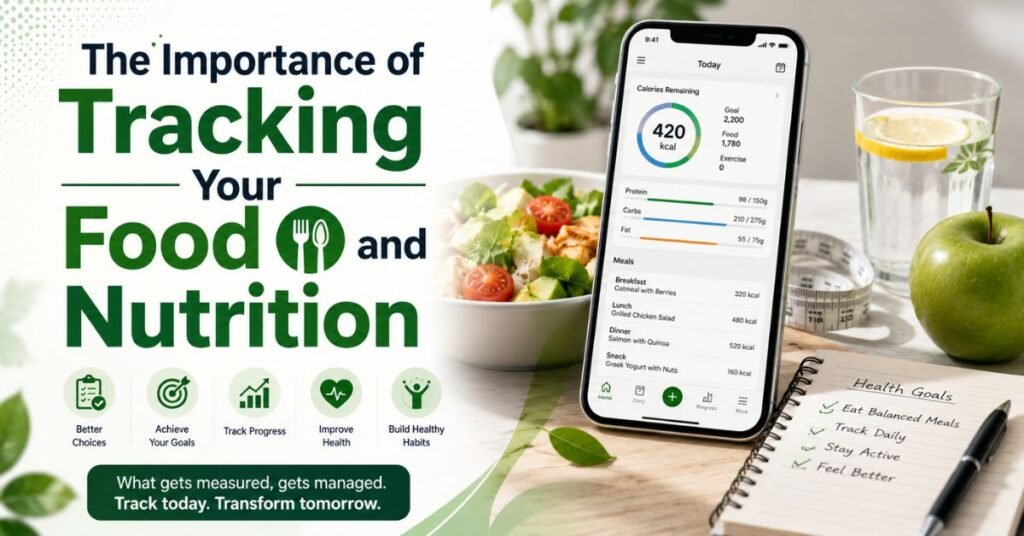
What did you eat last Tuesday? Most people cannot say. That gap is exactly why a daily food diary helps. Writing meals down turns vague guesses into clear facts. It is a simple step toward healthy eating habits and better food awareness.
Tracking builds awareness first. Change follows. You do not need fancy gear. A food tracking app, a website, or a paper notebook all work. The best method is the one you will actually use. That is the real secret behind food tracking benefits.
See Also: Antarvafna: Meaning, Benefits, and How to Practice Inner Awareness
What Research Says About Food Tracking
Studies back this up. A Duke University study followed adults with overweight who used a free smartphone app. After three months, all groups had lost a meaningful amount of weight. Those who tracked most often lost the most.
A study from Arizona State University compared an app, paper, and a phone memo. App users missed fewer days. Paper and memo users missed about twice as many. However, the app did not raise diet quality. Researchers said apps work best with advice from a registered dietitian. A smaller six-week trial in 2020 found paper and apps worked about the same. Confirm each study at its original source before you rely on the details.
How Tracking Food Can Support Healthy Eating Habits
Tracking shows your patterns. You may spot late-night snacks or skipped breakfasts. You also learn real food portion sizes, since many people eat more than they think. Gaps appear too. Maybe you rarely eat fruits and vegetables or enough protein intake. With your day on one page, small fixes feel easy. This is how food tracking improves eating habits over time.
How to Start Tracking Your Food: 7 Easy Steps
Start small. Really small. You do not need a perfect plan. A few easy habits will carry you far. Follow the steps below one at a time. This is the easiest way to learn how to track daily food intake.
| Step | What to Do | Why It Helps |
| 1 | Pick one tool: an app, a website, or a notebook | One tool keeps things simple |
| 2 | Set one small goal, like one more vegetable a day | Small goals are easier to keep |
| 3 | Log your food right after you eat | You will not forget meals |
| 4 | Check portions with a scale or measuring cups | You learn real food portion sizes |
| 5 | Save your favorite meals | It saves a lot of time |
| 6 | Use the barcode scanner for packaged foods | It is faster than typing |
| 7 | Review your week and pick one change | You keep improving |
Here is a quick case study. Imagine Maya, a beginner who skips breakfast. She picks a free app and sets one goal: eat a morning meal. After two weeks, her notes show she also snacks late at night. She swaps chips for fruit. Nothing dramatic happened. Yet her eating habits shifted in a good direction.
Tip: A missed entry is not a failure. Simply log the next meal and keep going.
Common Food Tracking Mistakes to Avoid
Many people quit within a few weeks. Perfectionism is the top reason. They try to log every bite and then give up after one missed meal. Another common mistake is trusting every number. Apps can have errors, especially when users add their own foods. Compare odd entries with the food labels or USDA FoodData Central. This protects nutrition app data accuracy.
Calorie-only thinking is the next trap. The Arizona State study showed that tracking can improve record keeping without improving diet quality. So look at what you eat and not only how much. Check for whole grains, fruits and vegetables, and protein. Also avoid comparing yourself to friends, since bodies and needs differ. Finally, do not skip expert help. An app shows numbers. A registered dietitian helps you understand them.
Who Should Be Careful With Food Tracking?
Counting and measuring can cause stress. This is a real concern for anyone with a past eating disorder or strong food anxiety. Eating disorder awareness matters here. If this sounds like you, talk to a doctor or registered dietitian before you start. Your health is more than a number.
The same advice applies if you are pregnant or have diabetes. Other health conditions also change your needs. A professional can set safe goals and explain personalized nutrition recommendations. If tracking starts to feel like a rule that controls you, stop. That is always okay. These food tracking risks are real, so listen to your body.
See Also: Spiritualhubz.com About: Website Overview, Topics, Features, and What You Should Know
Best Practices for Finding Reliable Nutrition Websites and Apps
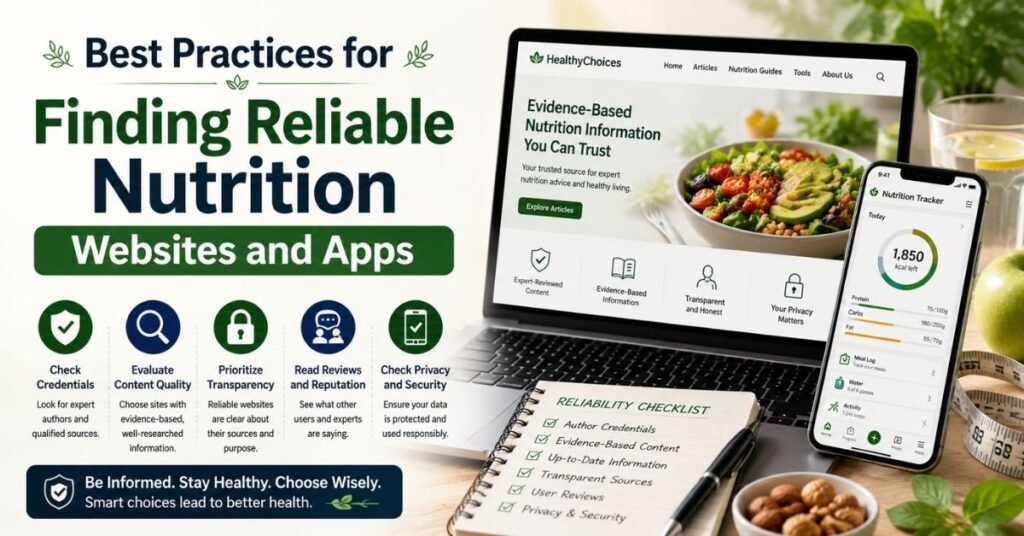
Think of it as a five-minute background check. Many tools share similar names, so a short routine saves trouble. Start by asking who made the tool. A real person, school, or company with a clear address is a good sign. Then look for expert review by a registered dietitian or doctor. These steps show you how to identify reliable nutrition websites.
Next, check the data source. Good tools often say their data comes from the USDA or another official body. Read the privacy policy too, so you know how your personal health information is stored and shared. Be wary of big promises and “miracle” products. Finally, try a free version first. You can test the tool before you pay. These habits make nutrition apps for beginners much safer.
MyNutrition.com Alternatives for Trusted Nutrition Information
You do not need to wait for one site to load. Many food tracking alternatives are free and trusted. Some give you data. Others give you advice or tools. Pick the one that fits your goal. This also covers MyNutrition website alternatives for readers around the world.
The table below compares good options. Check each link and current details yourself.
| Resource | Best For | Cost |
| USDA FoodData Central | Looking up food nutrition facts | Free |
| WSU myNutrition | Campus nutrition education | Free |
| Dietary Guidelines for Americans | General healthy eating | Free |
| Reputable tracking apps | Daily logging | Free or paid |
| Registered dietitian | Personal advice | Varies |
Frequently Asked Questions
Is MyNutrition.com a Real Website?
Several sites and apps use the name “My Nutrition” or something close. One well known example is the WSU myNutrition site. Because the names overlap, check the exact web address, the “About” page, and the privacy policy first.
Is MyNutrition.com Safe to Use?
Use caution. Run the checks in this guide, including the SSL certificate, ownership, and contact details. Never share payment details on a page that shows a security warning.
Is MyNutrition.com Associated With Washington State University?
No public proof shows a link. The WSU myNutrition site is a separate university project by WSU Dining Services. Ownership of the .com domain is not confirmed.
Why Is MyNutrition.com Not Opening?
Common causes include an expired domain, server downtime, DNS errors, and regional blocks. Try another browser, flush your DNS cache, or switch networks. If it still fails, the site may be offline.
Does MyNutrition.com Have a Nutrition Tracking App?
A separate My Nutrition app exists from a company named Codekia. News reports said it was free at launch. It used USDA data for more than 8,000 foods and offered My Diary, My Foods, and My Family. Check the app store page for current features and prices.
Where Can I Find Free and Trusted Nutrition Information?
Start with USDA FoodData Central for nutrient information. Read the Dietary Guidelines for Americans for general advice. For help made just for you, ask a registered dietitian or your doctor.
What Are the Best Alternatives to MyNutrition.com?
Good options include USDA FoodData Central, the WSU myNutrition site, and the Dietary Guidelines. Reputable tracking apps and a dietitian also work well. See the table above for a quick comparison.
Final Verdict
The name MyNutrition.com is shared by many services. Ownership and status need live checking. Hidden details and access errors call for care, but they do not prove a scam. The smart move is simple. Verify first and share data second.
What matters more is the habit behind the name. Learning about food and writing down what you eat can build healthy lifestyle habits. So pick one trusted tool and set one small goal. Keep your notes for two weeks. Then look at what you learned. If you need extra help, a registered dietitian can guide you.