

Crypto and Blockchain: A Complete Beginner’s Guide to Cryptocurrency, Wallets, and Security
Ever nodded along while a friend explained Crypto and Blockchain at dinner? You aren’t alone. Most people hear about cryptocurrency long before anyone explains it. This guide fixes that in plain English.
You will learn what digital assets are, how crypto wallets work, and how to boost your crypto security. You will also see which crypto scams to dodge and how crypto regulations like MiCA affect you. One note first. This page is for learning only. It doesn’t tell you what to buy, sell, or hold.
Crypto and Blockchain at a Glance
Here is the short version. Cryptocurrency is a form of digital currency that lives online. Blockchain is the shared record book underneath it. Picture a notebook that thousands of strangers copy and check at the same time. Nobody can quietly change a page because everyone else would spot it. That shared notebook is the heart of blockchain technology.
The table below gives quick answers. Each answer gets more detail later in the guide. Read it now for a map of the road ahead. Then use it as a refresher when you finish.
| Topic | Short answer |
| What crypto is | Digital assets recorded on a shared ledger called a blockchain |
| What a wallet holds | Your private keys, not the coins themselves |
| Biggest beginner risk | Crypto scams and lost keys, more often than technical hacks |
| Can transactions be reversed? | Usually no; on-chain transfers are final once confirmed |
| Main EU law | MiCA, Regulation (EU) 2023/1114 |
| MiCA status (as of November 2026) | Fully applied; the provider transition period ended on July 1, 2026 |
| Investment advice here | None; this guide is educational only |
What Is Cryptocurrency?
Cryptocurrency is money that exists only as data. No coin or paper note exists. Instead, a decentralized network of computers tracks who owns what. Bitcoin (BTC) launched in 2009 as the first widely used example. Its creator explained the idea in the Bitcoin whitepaper. Since then, thousands of other crypto tokens and crypto coins have appeared. Some aim to work as money. Others power apps or track real-world items.
Why does this matter to you? Because it changes who controls digital asset ownership. In the old system, a bank keeps your records. In the crypto system, software and thousands of computers keep them. That shift brings freedom. It also brings new crypto risks. The next sections show how it all works.
How Cryptocurrency Works
Think of one payment as a sealed envelope with a public receipt. You tell the network you want to send some Bitcoin to a friend. Your wallet signs that message with your private key. The signature proves the request is really yours. Computers across the network then check that you own enough funds.
Once enough of them agree, they add the payment to the record. That step is transaction confirmation. You pay a small crypto transaction fee to the people or machines who do the checking. On Ethereum (ETH), people call this fee “gas.” This transaction verification process explains how Bitcoin transactions work without a bank in the middle. It also shows why crypto transactions are so hard to undo.
Types of Cryptocurrency: Coins, Tokens, and Stablecoins
Not every cryptocurrency is the same. Crypto coins run on their own blockchain. Bitcoin (BTC) and ether (ETH) are good examples. They usually pay network fees. Crypto tokens are built on top of an existing chain through smart contracts. That is the difference between coins and tokens. Stablecoins try to hold a steady price by linking to a currency like the US dollar or the euro.
See Also: Minnesota Vikings vs New York Giants Match Player Stats: Complete Game Breakdown
Their stability depends on the stablecoin reserves and the company behind them. Non-fungible tokens (NFTs) are unique items that point to art, game assets, or other one-of-a-kind things. Under EU law, some stablecoins fall into two groups: e-money tokens and asset-referenced tokens. These types of cryptocurrencies each carry different risks.
| Type | What it does | Example |
| Crypto coin | Runs its own blockchain and pays fees | Bitcoin (BTC), Ethereum (ETH) |
| Crypto token | Lives on another chain through smart contracts | App credits, voting tokens |
| Stablecoin | Tries to track a currency or other asset | Dollar-linked or euro-linked tokens |
| NFT | Points to one unique item | Digital art, game items |
Cryptocurrency vs. Traditional Money
Cryptocurrency vs traditional currency comes down to one question. Who keeps the record? With a bank, the bank does. It can freeze, reverse, or refund your payment. With crypto, the network keeps the record. You control the keys. That gives you more power. It also means you have no help desk if you send funds to the wrong address. Regular money from a government is called fiat currency. Some central banks are also testing their own digital versions. These are called central bank digital currencies. They differ from crypto because one authority still runs them.
| Feature | Bank money | Cryptocurrency |
| Who keeps the record | The bank | A blockchain network |
| Can payments be reversed? | Often yes | Usually no |
| Who holds access | The bank, for you | You, through your keys |
| Opening hours | Business hours for some services | Open 24/7 |
| Help if you make a mistake | Customer support | Often none |
What Is Blockchain Technology?
Blockchain technology is a type of distributed ledger technology. That means many computers hold the same record at once. Imagine a group chat that nobody can secretly edit. Every member keeps a copy. If one person tries to change an old message, everyone else sees the mismatch. That is why people trust the distributed ledger system without trusting any single company.
Many people think blockchain only exists for coins. That isn’t true. Banks, hospitals, and shipping firms all test blockchain applications. The idea is simple. A shared record is hard to fake. We will look at real uses soon. First, let’s see how the machine works.
How Blockchain Works
A blockchain groups data into blockchain blocks. Each block holds a batch of blockchain transactions. Then cryptographic hashing turns the block’s contents into a short digital fingerprint. Each new block carries the fingerprint of the one before it. That link forms a chain. If someone changes an old block, its fingerprint changes. The mismatch breaks every later link. A consensus mechanism then lets the network agree on one true version. Two common methods are proof of work and proof of stake. These blockchain consensus algorithms decide who may add the next block. They also deter cheaters. For a deeper walkthrough, read our guide on how blockchain works.
How Blockchain and Cryptocurrency Work Together
The relationship between blockchain and cryptocurrency is simple. Blockchain is the engine. Crypto is the fuel. The chain needs a reason for strangers to keep it honest. Crypto supplies that reason. Computers that check and add blocks earn rewards in the chain’s own coin. They also collect fees from users. This setup is called incentive design. It rewards honest work. In turn, the blockchain network stays secure without a boss. That is how decentralized financial systems run day after day.
Key Features of Blockchain Technology
Four features make blockchain stand out. First comes immutability. Past records are very hard to change. Second comes blockchain transparency. Anyone can view public chains. Third comes decentralization. No single owner holds control. Fourth comes strong blockchain data security. Cryptography protects every link. Still, there are limits. Some chains process payments slowly. Others get crowded and costly. Experts call this a scalability problem. So blockchain isn’t magic. It is a tool with clear strengths and trade-offs.
How Blockchain and Cryptocurrency Are Used
Here is a surprise. Most blockchain applications today have little to do with buying coins. Companies use shared ledgers for tracking goods, proving identity, and settling deals. Meanwhile, everyday people use crypto to send money, play games, and join online communities. The range is wide.
Some uses are mature. Others are still experiments. Below you will find six of the most common ones. As you read, ask a simple question. Does a shared record really fix the problem? Sometimes it does. Sometimes an ordinary database works better.
Cryptocurrency in Finance and Digital Payments
Think of a worker abroad who sends money home. A bank transfer may take days and eat a chunk in fees. A crypto transfer can arrive in minutes. That is why cryptocurrency payments and stablecoins attract so many people in cross-border payments. Decentralized finance, often shortened to DeFi, goes further. It offers lending and trading through code rather than through a bank. These digital payment systems can be fast and open at any hour. However, you must still watch for price swings, fees, and scams. Moving money is easy. Moving it safely takes care.
Smart Contracts and Decentralized Applications
Smart contracts work like vending machines. You put in the right input. The machine gives you the right output. No clerk is needed. A smart contract is a small program on a blockchain that runs by itself when set conditions are met. Decentralized applications, or dApps, use these programs to build apps without a central owner. Ethereum made this idea popular. Developers who want to start can explore blockchain development tools and learn smart contract development step by step. Yet code can have bugs. A flaw in a contract can drain funds. So careful testing matters a great deal.
Blockchain in Cybersecurity and Data Protection
Blockchain can help protect records. Since past entries are hard to change, the ledger makes a strong audit trail. Some teams use it for identity checks and for proving that a file hasn’t been altered. That supports digital asset protection and trust. Still, don’t overstate it. A blockchain won’t fix a weak password. It also won’t stop a person from clicking a bad link. Think of it as a tamper-evident seal. It shows if something changed. It doesn’t lock every door in the house.
Blockchain in Healthcare and Digital Records
Hospitals and drug makers test blockchain for patient records and medicine tracking. A shared ledger can show where a drug came from and who handled it. That may help spot fake medicine. Health data is also very private. Public chains aren’t a good place for raw personal details. So most projects keep sensitive data off the chain and store only proofs on it. Many of these efforts are still pilots. Treat bold claims with care until real results appear.
NFTs and Digital Ownership
Non-fungible tokens, or NFTs, act like digital certificates of ownership. Each one is unique. An NFT might point to a piece of art, a concert ticket, or a game item. Owning the token proves you hold that entry on the chain. It doesn’t always give you the copyright. For example, buying an NFT of a picture rarely lets you sell prints of it. Always read the terms. Prices of NFTs can also swing wildly. That makes them a high-risk area for newcomers.
Blockchain in Voting and Governance
Some groups use blockchain for voting and public records. The goal is a clear, checkable tally. Online communities also run DAOs, which are groups that vote on shared decisions through code. Yet government elections raise tough questions. Voters need secrecy. Systems need strong security. Experts disagree on whether blockchain fits those needs. So this area stays a topic of debate and testing rather than a settled answer.
Benefits and Disadvantages of Cryptocurrency
Let’s look at both sides with no hype and no fear. Cryptocurrency adoption has grown because crypto offers real perks. It also carries real crypto risks. A fair view needs both. Your goals and comfort with risk decide whether the perks matter to you.
Remember one rule. Anything that can rise fast can also fall fast. The table below sums up the trade-offs. Then each point gets a closer look.
| Benefits | Disadvantages |
| Control over your own money | No help desk if you make a mistake |
| Open 24/7 | Cryptocurrency volatility |
| Fast on-chain transfers | Fees can spike when the network is busy |
| Access for people without banks | Scams and phishing |
| Transparent public records | Tax and reporting rules that differ by country |
Benefits of Using Cryptocurrency
Crypto gives you direct control. You can hold your own funds without asking a bank. Markets run day and night. Public chains let anyone check records. Some users also value that no single party can easily block a payment. This is called censorship resistance. These traits explain the growth of digital asset ownership around the world. Still, control cuts both ways. If you lose your keys, nobody can restore them.
Faster Payments and Lower Transaction Fees
A wire transfer across borders may take days. A crypto transfer may take minutes. Fees can also be lower. However, crypto transaction fees aren’t fixed. When many people use a network at once, fees can jump. Compare options before you send. Check the fee and the speed. A cheap, quick option today may be costly tomorrow.
Global Accessibility and Financial Inclusion
Millions of people lack easy access to a bank. A phone and an internet link can open a crypto wallet in minutes. That helps people who are unbanked or underbanked. It also supports decentralized financial systems in places with limited services. There is a catch. You need reliable internet and a basic grasp of crypto security. Without those, access can turn into exposure to fraud.
See Also: Milwaukee Bucks vs Oklahoma City Thunder Match Player Stats: Complete Game Breakdown
Risks of Cryptocurrency Volatility
Cryptocurrency volatility means prices can swing hard in a short time. A coin could lose half its value in a few weeks. It might also rise just as fast. Nobody can predict these moves with certainty. That is why you can lose some or all of the money you put in. This guide doesn’t tell you what to buy or sell. If you consider an investment, speak with a licensed professional first.
Tax Implications and Regulatory Challenges
Many countries treat crypto gains as taxable. Rules differ from place to place. Some tax profits from selling. Others tax income from payments or rewards. Good record keeping helps. Save dates, amounts, and prices for every trade. Regulatory compliance also changes often. Check your national tax office and ask a licensed tax professional for advice.
Crypto Wallets Explained
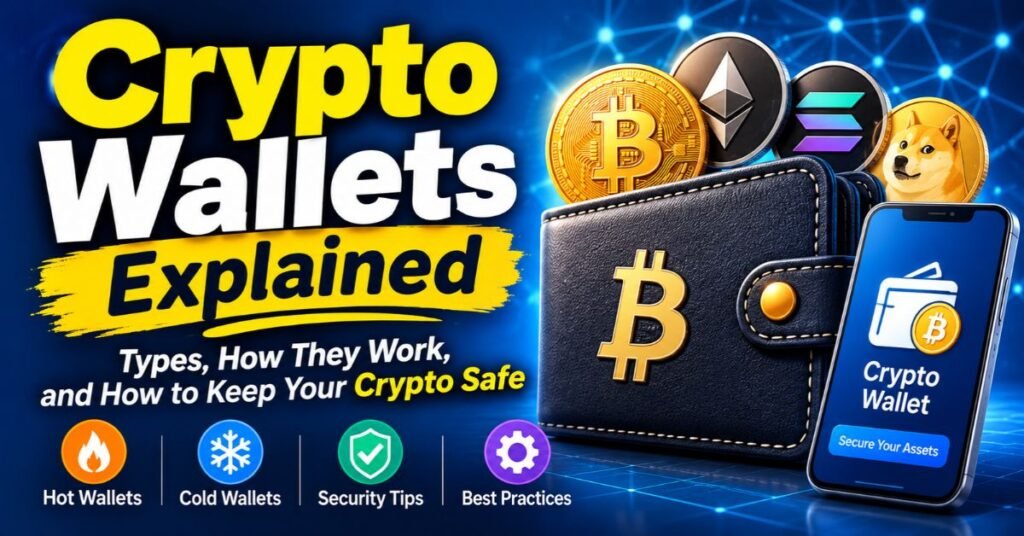
A crypto wallet is a keyring, not a piggy bank. Your coins stay on the blockchain. The wallet holds the private keys that prove they are yours. Whoever controls the keys controls the funds. That is why wallet choice matters so much.
Good wallet security starts with understanding this one idea. Once you get it, the rest feels simpler. Let’s walk through how wallets work, which kinds exist, and how to choose.
How Cryptocurrency Wallets Work
When people ask how crypto wallets work, the answer is short. A wallet creates a pair of keys. It shows you a public address you can share. It also guards a private key that signs your crypto transactions. The wallet reads the blockchain and shows your balance. It doesn’t hold coins like a leather wallet holds cash. It simply lets you prove ownership and move funds.
Public Keys, Private Keys, and Seed Phrases
Picture a mailbox. The slot is open to anyone. That is your public key and public address. People can drop funds in. The mailbox key is your private key. Only you should have it. Most wallets also give you a seed phrase, also called a recovery phrase. It has 12 or 24 words. These words can rebuild all your keys on a new device. That is the crypto wallet recovery process. Anyone who sees the words can take your funds. So protecting private keys and keeping a secure seed phrase backup are your top jobs. Never share the words with anyone. No real support worker will ever ask for them.
Types of Crypto Wallets
Wallets come in several forms. A software wallet runs on your phone or computer. It is a hot wallet because it connects to the internet. That makes it handy for small, daily use. A hardware wallet is a small device that keeps your keys offline. It acts as a cold wallet. This is the heart of the hardware wallet vs software wallet question. Hot wallets are easy. Cold wallets are safer for larger amounts. Many people also keep a paper or metal backup of their seed phrase for offline cryptocurrency storage.
| Wallet type | Who holds the keys | Good for | Main trade-off |
| Custodial wallet (exchange account) | The company | Beginners, frequent trading | You rely on the company staying honest and solvent |
| Software wallet (hot) | You, on a phone or browser | Small amounts, daily use | Exposed to malware and phishing |
| Hardware wallet (cold) | You, on a separate device | Larger or long-term holdings | Costs money; you must guard the device and seed phrase |
| Paper or metal backup | You, offline | Storing the seed phrase | Can be lost, damaged, or found by others |
Custodial vs. Non-Custodial Wallets
The custodial vs self-custody storage choice is about trust. With custodial services, a company holds your keys. That is simpler. Yet you depend on the company. A self-custody wallet removes that middleman. These non-custodial wallets put all backups and safety tasks on you. Many people use both. They buy through a regulated platform and store savings in a personal wallet. In the EU, custodians must now hold authorization under MiCA. That adds a layer of cryptocurrency consumer protection.
Cryptocurrency Security: How to Protect Your Digital Assets
Most losses don’t come from a “hacked blockchain.” They come from stolen keys, tricks, and fake apps. That means you hold real power over your own safety. A few steady habits block most attacks. Good cryptocurrency security best practices don’t need technical skills.
Digital asset protection works in layers. No single step is perfect. Together, they make you a much harder target. Use the checklist below as your starting point. Then read on for details on phishing and SIM swaps.
Essential Crypto Security Checklist
This checklist shows how to protect cryptocurrency in daily life. Work through it once. Then repeat it every few months.
| Step | What to do | Why it helps |
| 1. Back up your seed phrase | Write it on paper or metal; never store it in email, cloud notes, or screenshots | Stops online thieves from finding it |
| 2. Turn on 2FA | Use an authenticator app or security key instead of SMS | Protects crypto exchange accounts |
| 3. Use official downloads | Get wallets only from the real website or store listing | Avoids fake apps |
| 4. Bookmark your sites | Don’t reach them through ads or messages | Prevents fake login pages |
| 5. Send a test amount | Try a tiny payment before a big one | Catches wrong addresses early |
| 6. Read what you sign | Watch for “unlimited approval” pop-ups | Stops contracts from draining tokens |
| 7. Update your devices | Keep phone, computer, and wallet apps current | Closes known security holes |
How to Protect Against Phishing and SIM-Swap Attacks
Phishing attacks often look real. You may get a message about a locked account or a “wallet support” chat. The link leads to a fake login page. Preventing phishing attacks is mostly about slowing down. Type web addresses yourself or use bookmarks.
Real support staff will never ask for your seed phrase. SIM swap attacks work differently. A criminal tricks your phone carrier into moving your number to their SIM card. Then they get your text-message login codes. That is SIM swapping. For SIM swap fraud prevention, ask your carrier for a port-out PIN or account lock. Also move your 2FA to an authenticator app or security key where you can. Together, these steps raise your digital payment security a lot.
See Also: ProgramGeeks Social Media: Latest News, Platform Updates, and Trends in 2026
Safe Crypto Storage Practices
Good crypto storage means planning for fire, theft, and forgetfulness. Keep your seed phrase offline. A fireproof box or a safe works well. Don’t keep every copy in one place. Spread backups across safe locations. Use cold storage for savings and hot storage only for small spending money. Think about the future too. If something happens to you, could a trusted person find your instructions? Write simple notes that explain where things are without revealing the words themselves. That is how to store cryptocurrency safely for the long run.
Common Cryptocurrency Scams and Red Flags
Scammers love crypto for one reason. Payments are fast and hard to reverse. The US Federal Trade Commission says that once you pay with crypto, you can usually only get your money back if the person you paid sends it back. That makes prevention far more valuable than any cure.
Learning the usual tricks is your best shield. The FTC’s crypto scam guide is a good reference to share with family. Below, you will see the most common schemes and the warning signs that give them away.
Common Types of Crypto Scams
Crypto fraud comes in many forms, but the patterns repeat. Pig butchering scams start with a friendly stranger who builds trust for weeks. Then they steer you to a fake trading site. Rug pulls happen when developers launch a token, gather buyers, and vanish with the money. Recovery scams hit people twice. After a loss, someone offers to get your money back for a fee. The fee is the scam.
| Scam type | How it works | Red flag |
| Investment or pig butchering scam | A friendly stranger builds trust, then pushes a fake trading site | Online contact you never met who talks about crypto profits |
| Fake exchange or app | A polished site shows rising “gains” but blocks withdrawals | You must pay a “tax” or “unlock fee” to withdraw |
| Giveaway scam | Fake celebrity accounts promise to double your crypto | “Send 1, get 2 back” |
| Impersonation | Someone poses as a bank, agency, or wallet support | Requests for your seed phrase or remote access |
| Rug pull | Developers take the funds and disappear | Anonymous team, locked selling, hype with no product |
| Recovery scam | A “helper” offers to retrieve stolen funds | Upfront payment to “recover” crypto |
How to Recognize Cryptocurrency Fraud
Start with a simple rule. If it feels rushed, pause. Scammers create urgency on purpose. Be wary of guaranteed returns because no honest project can promise profit. Be wary of anyone who insists on payment in crypto. Be wary of anonymous teams with big promises. Also learn about recognizing fake crypto websites. Check the address letter by letter. Look for small spelling tricks. Search the company name plus words like “scam” or “complaint.” Good crypto fraud prevention is mostly patience. One strong red flag is enough reason to stop.
What to Do If You Get Scammed
Here is what to do after crypto fraud. First, stop sending money. Scammers often ask for “one more payment” to release your funds. Second, save evidence such as wallet addresses, transaction IDs, screenshots, and chat logs. Third, contact the exchange or platform you used right away.
Fourth, report it to your national police or consumer agency. In the US, that means the FTC and the FBI’s IC3. Elsewhere, use your local authority. Finally, ignore anyone who offers paid help with recovering stolen cryptocurrency. Real recovery is rare. Most of those offers are another scam.
Cryptocurrency Regulations Around the World

The trend is clear across the globe. Countries are adding crypto regulations with more licensing, more consumer protection, and tighter rules for stablecoins. Governments want to keep the benefits of innovation while limiting harm. That affects the apps and platforms you use every day.
Rules change often. A platform that is legal today may face new limits tomorrow. So always check your national regulator before you sign up for a new service. Understanding global digital asset regulations helps you pick safer tools.
See Also: ProgramGeeks Hosting: A Complete Guide to Hosting Features, Plans, Security, and Reliability
EU Markets in Crypto-Assets Regulation (MiCA)
The Markets in Crypto-Assets Regulation (MiCA) is formally Regulation (EU) 2023/1114. You can read the full text on EUR-Lex. This MiCA regulation gives all EU states one rulebook. It rolled out in stages. The law entered into force in June 2023.
Rules for e-money tokens and asset-referenced tokens began on June 30, 2024. Rules for crypto-asset service providers (CASPs), such as exchanges and custodians, began on December 30, 2024. The final transition periods ended on July 1, 2026. In June 2026, the European Securities and Markets Authority (ESMA) called on unauthorised providers to wind down in an orderly way. The agency posted its public statement as a clear warning to the market. It also reminded clients that users of unauthorised providers do not benefit from MiCA safeguards. That is why you should confirm which exact company you signed up with.
| Date | MiCA milestone |
| June 2023 | Regulation enters into force |
| June 30, 2024 | Stablecoin rules (e-money tokens and asset-referenced tokens) apply |
| December 30, 2024 | Rules for CASPs apply |
| July 1, 2026 | Transition period ends; only authorised CASPs may serve EU clients |
What MiCA Means for Everyday Crypto Users
For you, MiCA compliance requirements bring practical gains. EU crypto exchange authorization means providers need a license. Crypto service provider licensing also brings rules on custody, complaints, and conflicts of interest. Stablecoin regulations require issuers to hold stablecoin reserves and share information about them. Token issuers must publish a white paper with set details. Still, MiCA doesn’t make crypto safe. It doesn’t stop prices from falling. It sets conduct rules for companies. It is not a promise about value. Think of it as a seat belt. It lowers certain risks. It doesn’t stop the car from crashing.
Cryptocurrency Regulations in Other Regions
Other regions take different paths. In the United States, oversight is split across several agencies. Congress also passed the GENIUS Act in 2025 to set federal rules for payment stablecoins. The United Kingdom runs its own registration and licensing system. Many countries in Asia, Africa, and Latin America are building rules too. These cryptocurrency legal requirements differ widely. If you live outside the EU, MiCA may still touch you because global platforms often adjust their services to meet it. Always check your own country’s regulator for the latest rules.
Cryptocurrency and Blockchain for Businesses
Imagine a small shop owner who wonders if cryptocurrency payments are worth the trouble. It’s a fair question. Some firms gain new customers and faster payments. Others find extra work with taxes and price swings. The answer depends on your size, your market, and your tools.
Developers and business owners face different choices. A shop owner worries about checkout and records. A developer worries about code and security. If you run an online store, compare crypto with cards in our Business & E-commerce hub. If you are picking tools to build with, our Software hub covers what to look for.
Benefits of Accepting Cryptocurrency Payments
Accepting cryptocurrency payments can open doors. You may reach customers who prefer crypto. You offer more payment choice. You also avoid card chargebacks because confirmed blockchain transactions don’t reverse easily. That can protect sellers from some fraud. These gains explain rising business cryptocurrency adoption in online shops, travel, and digital services. Yet each benefit has a flip side. We will cover the risks shortly.
Lower Transaction Costs and Faster Payments
Cryptocurrency payment processing often costs less than cards. Card networks charge fees on each sale. Crypto fees depend on the chain and the processor. Settlement can also be faster. Funds may arrive in minutes instead of days. That helps digital payment infrastructure and cash flow. Still, compare fairly. Crypto transaction fees can rise during busy periods. Check both the processor’s rates and the network’s rates.
Reaching Global Customers Through Crypto
Crypto is borderless. A shop in one country can sell to buyers in another without complex bank links. That cuts delays and some currency conversion costs. It also helps small firms enter new markets. Many sellers use a payment processor to handle the details. The processor can turn crypto into local money at once. That makes blockchain for business applications easier to try.
Business Challenges and Risks of Cryptocurrency Adoption
Businesses face real hurdles. Prices can swing between the sale and the payout. Accounting and tax records take extra care. Crypto compliance and regulatory compliance rules vary by country. Security also matters because stolen keys mean lost funds. Customers may need support too. A simple way to manage price risk is instant conversion to local currency. Even then, plan for audits and rule changes. Start small. Test before you scale.
The Future of Cryptocurrency and Blockchain Technology
Several trends are worth watching. One is the tokenization of real-world assets, which puts things like bonds or property on a chain. Another is stablecoin payments, which may grow as rules like MiCA and the GENIUS Act bring clearer guardrails. A third is scalability upgrades, often called Layer 2 networks, which aim to make payments faster and cheaper. Central banks are also testing their own digital currency designs. All these ideas could push cryptocurrency adoption further.
Yet the future is uncertain. Nobody can predict prices or pick winners. Some projects will fade. Others will surprise us. The wisest move is to keep learning. Stay curious. Stay careful. Treat bold promises with healthy doubt.
Frequently Asked Questions
What Is the Difference Between Cryptocurrency and Blockchain?
Cryptocurrency is the digital asset. Blockchain is the ledger it lives on. Think of the blockchain as the road and the crypto as the vehicles that travel on it. A blockchain can also exist without any coin. Many companies use private chains for tracking goods or records, with no public token at all.
Is Cryptocurrency a Safe Investment?
This guide gives no investment advice. We can say that cryptocurrency volatility is high. Prices can drop fast. You can lose some or all of your money. Crypto risks also include scams, lost keys, and changing rules. Before any financial decision, do your own research and speak with a licensed professional in your country.
What Is the Safest Way to Store Cryptocurrency?
No option is perfect. Many people use a hardware wallet for larger amounts. They also keep an offline backup of the seed phrase. A regulated custodial wallet can feel simpler, but you depend on the company. Choose based on how much you hold and how much responsibility you want.
Can Cryptocurrency Transactions Be Reversed?
Usually not. Once the network confirms on-chain transfers, nobody can undo them. If you sent funds to an exchange address by mistake, contact that exchange quickly. It may be able to help. If you sent them to a private wallet, you likely can’t get them back.
How Can Beginners Avoid Cryptocurrency Scams?
Watch for guaranteed returns and pressure to act fast. Be wary of requests to pay in crypto. Never share your seed phrase with anyone. Use 2FA, bookmark trusted sites, and send a small test amount first. If any single warning sign appears, stop and think.
Does MiCA Apply to People Outside the European Union?
MiCA covers companies that offer crypto services to people in the EU. If you live elsewhere, your own country’s rules apply. Still, global platforms often change their services to meet MiCA. Check which rules protect you where you live.
Conclusion
Crypto gets easier once you see the pieces. A blockchain keeps the record. A wallet holds your keys. Your habits protect those keys. Scams rely on rush and the promise of easy profit. So slowing down is your best defense. With MiCA fully in place across the EU since July 1, 2026, users there can check whether a provider is authorized before they sign up.