
AnalyzingMarket.com: Business, Finance, Technology, and Market News
Markets don’t wait for you. A single policy note can shift prices before lunch. A product launch can lift one sector and sink another. That speed is why a good business news website matters. AnalyzingMarket.com is an online business publication that follows business and finance reporting, tech stories, and market trends for readers worldwide.
Maybe you trade stocks. Maybe you run a startup. Maybe you just want the headlines to make sense. Whichever fits, analyzingmarket com puts companies, money, and machines under one roof. The sections below show what it covers, who gains the most, and how you can read it with a sharp eye.
What Is AnalyzingMarket.com?
AnalyzingMarket.com works as a financial news platform and a business news website. It publishes corporate news, financial market updates, and technology news in one place. Think of it as a newsstand that lives on your phone. You can read a company story, then a tech story, then a money explainer. You never change sites. The site’s ownership and editorial team aren’t obvious from its pages alone. Check its About page before you quote it as an authority.
The mix is deliberate. Quick news items sit beside longer explainers. That helps readers who aren’t full-time analysts. A student can learn how interest rate decisions move prices. A manager can follow business intelligence stories without wading through jargon. This blend supports financial education and gives everyday readers reliable information sources they can build on.
What Topics Does AnalyzingMarket.com Cover?
No single subject rules the site. Coverage spans business reporting, stock market news, technology trends, and market analysis. Each area feeds the others. That’s the real strength of a wide online business publication. You see the whole picture instead of one slice. The table below sums up the five main areas.
Topics link together in surprising ways. In 2022, central banks raised rates to fight inflation. The Nasdaq Composite fell by roughly a third that year. Tech firms felt the pain first. Startups then found funding rounds harder to close. One interest rate decisions headline touched all three stories. Readers who follow several sections catch these chains early.
| Topic Area | What You Can Expect | Why It Matters |
| Business and company news | Company updates, startup news, deals | Shows how firms grow or shrink |
| Financial markets | Stock market news, exchange trading, rates | Tracks where money moves |
| Technology | AI, cloud, security, software | Reveals what drives future profits |
| Industry developments | Sector trends in retail, health, factories | Links trends to real businesses |
| Corporate and economic updates | Earnings, indicators, policy | Explains the wider economy |
Business and Company News
Business stories begin with people and plans. Company updates track company strategy, product launches, and company leadership changes. Corporate leadership shifts can signal a new direction overnight. Startup news follows fresh ideas, and startup funding shows which ideas earn trust. Big mergers and acquisitions reshape whole industries. Consider PayPal.
Confinity and X.com merged in 2000 to form the company. eBay then bought it in 2002 for about $1.5 billion. That single deal changed online checkout for good. Stories like this show how business developments, company growth strategies, and leadership transitions shape the wider startup ecosystem. They also explain why business acquisitions deserve a careful read.
Financial Markets and Investment Insights
Money news moves fastest. This section covers financial market updates, stock exchange activity, and global market movements. It also shares investment insights for retail investors and institutional investors alike. Background helps here. The London Stock Exchange traces its formal start to 1801, according to its own history page.
Nasdaq launched in 1971 as the first electronic stock market. The two venues still behave differently. Knowing that makes exchange trading stories easier to read. Large capital markets shifts often begin with small signals. Therefore, clear reporting on stock exchange performance and financial market movements gives you a head start. It also points to investment opportunities you might miss.
Technology and Emerging Trends
Technology now sits at the center of markets. Technology news here covers artificial intelligence, cloud computing, and cybersecurity. It also follows the software industry and data analytics. Nvidia shows why this matters. Jensen Huang, Chris Malachowsky, and Curtis Priem founded it in 1993.
Today its chips power much of the Technology sector. Chip demand and cloud services spending move share prices. Good technology reporting explains those links in plain words. You also meet enterprise software stories and digital transformation projects. Look for artificial intelligence (AI) applications, cloud infrastructure, and cybersecurity solutions too. Each one shapes enterprise technology and technology investments across the globe.
Industry Developments and Market Analysis
Every sector has its own rhythm. Industry analysis explains why. Coverage touches the retail industry, manufacturing sector, and healthcare technology. It also tracks ecommerce trends and the fintech industry. Each of these shows how sector trends play out in daily life.
For example, financial technology (Fintech) apps changed how people pay and borrow. Meanwhile, online shopping keeps reshaping stores and shipping. Industry developments like these feed financial market analysis. They also support market research for founders and analysts. Strong reporting highlights sector performance, fintech innovations, ecommerce growth, and manufacturing trends. It also notes healthcare industry developments and retail market changes, which help you spot market opportunities sooner.
Corporate and Economic Updates
Economic news explains the stage on which companies perform. Economic developments cover growth, jobs, and prices. Economic indicators such as inflation and employment give clues about what comes next. Readers can spot economic patterns and long-run economic trends by following them over time.
Trade reporting adds another layer, since tariffs and shipping costs hit profits fast. Capital flows show where investors send money across borders. Company results matter too. Salesforce reported $37.9 billion in revenue for fiscal 2025, with subscriptions supplying most of it, as its investor site shows. Numbers like these reveal corporate performance. Together, they paint a clear picture of global economic conditions.
See Also: App and Socials AlienSync: What It Is, How It Works, Features, and What to Know
Key Features of AnalyzingMarket.com
A good site does more than post news. It helps you learn. AnalyzingMarket.com offers four main features. Each one saves you time. Each one makes business reporting easier to follow. The table below lists them with their payoff.
These features work as a team. Wide coverage gives you choice. Educational pieces give you context. Fresh posts keep you current. A clean layout keeps you reading. That combination suits busy people on every continent.
| Feature | What It Does | Benefit to You |
| Wide category range | Covers business, finance, and tech | Fewer open tabs |
| Educational articles | Explains hard ideas simply | Faster learning |
| Regular updates | Adds new posts often | Current awareness |
| Clean format | Uses short blocks and clear headings | Easy mobile reading |
Wide Range of Business and Finance Categories
Variety is the first draw. One site can replace five open tabs. You can read corporate news in the morning. At lunch, you can check stock market news. By evening, you can scan technology news and industry updates. That range helps business professionals who need context from several fields. It also helps students who haven’t picked a specialty yet. When one site links global financial markets, market trends, and economic developments, you see how they connect. As a result, you gain market awareness without hunting across many sources. Such business information resources save effort and sharpen your view of the world.
Informative and Educational Articles
Explainers turn confusing topics into clear steps. They show how markets are read, how risk works, and how portfolios grow. Good educational articles cover investment strategies, portfolio management, and financial risk management. They also explain capital allocation and investment risk assessment. Think of them as a friendly tutor. You learn the rules before you play the game. That matters because financial knowledge protects your money. Beginners gain confidence. Experienced readers refresh old ideas. Strong accessible financial reporting never talks down to anyone. It simply explains the idea, gives an example, and moves on.
Regular Content Updates
Markets change daily. News that sits still goes stale fast. Regular posting helps you follow financial market updates and company updates while they still matter. Frequent updates also help you spot market trends early. The site doesn’t state a fixed schedule, so check its recent posts to judge the pace yourself. Fresh content supports industry updates and keeps technology trends in view. Readers who return often notice patterns that a single visit would miss. Over weeks, those small signals add up. They can shape how you think about prices, products, and plans.
Reader-Friendly Content Format
Layout matters more than most people admit. Tidy headings help you find what you need. Short blocks scan well on a phone. Plain words keep complex market analysis from feeling heavy. This format suits readers who check news on a bus or between meetings. It also keeps data-driven decision-making approachable, because numbers sit inside clear sentences. Tables and short lists, where they appear, break up dense text. A reader-friendly design isn’t just pretty. It lowers the effort needed to learn. Therefore, more people finish articles and remember what they read.
Why Do Readers Visit AnalyzingMarket.com?
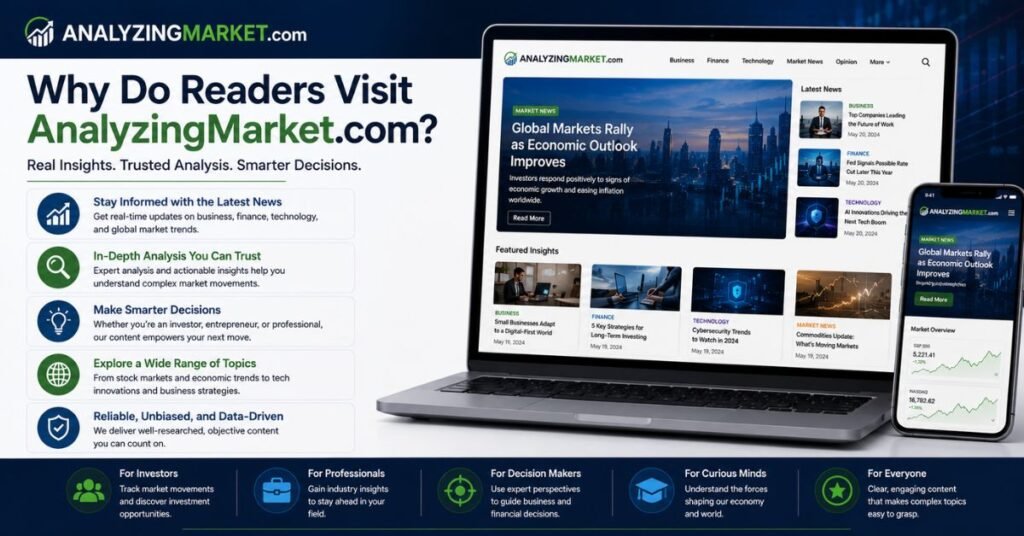
Plenty of sites publish market copy. Few keep it readable. That gap explains much of the appeal. AnalyzingMarket.com gathers business and finance reporting, tech stories, and industry developments in one spot. Hard money ideas get plain language. You don’t need an economics degree to follow along. Readers also like the range. A retail investors question and a company strategy question can both find answers in the same visit.
Another reason is cross-reading. A story about shoppers often explains a story about rates. A story about chips often explains a story about stocks. Moving across categories builds market opportunities awareness and sharper judgment. Business professionals use that habit to prepare for meetings. Students use it to connect lessons to real events. In short, readers come back because the site saves time and teaches as it informs.
See Also: RobTheCoins: What It Is, How It Works, Features, and Business Model
Who Can Benefit from AnalyzingMarket.com?
Different readers want different things. Still, they share one need. They want clear, current, and trustworthy information. A financial news platform that serves all of them has to balance depth and simplicity. The four groups below show how that balance works in practice.
Think of the site as a shared library. Each visitor walks to a different shelf. Yet everyone leaves knowing a little more than before. The table gives a quick view of who reads what.
| Reader Group | Main Interest | Typical Use |
| Investors | Prices, flows, events | Spot moves that touch holdings |
| Founders | Gaps, funding, tactics | Learn from tested methods |
| Students | Live examples | Add real news to coursework |
| Professionals | Industry change | Stay ahead at work |
Investors and Market Enthusiasts
Investors want signals. Retail investors read exchange news, capital flows, and events that might move their holdings. Institutional investors watch the same stories for bigger positions. Both groups use investment insights to review investment portfolios and portfolio diversification. Good coverage supports trading strategies without pushing anyone to act. Remember one rule. News isn’t personal advice. A licensed advisor can match ideas to your goals and your tolerance for risk. Used wisely, regular reading builds market awareness and calmer habits during market volatility. It also helps you separate real shifts from noise.
Business Owners and Entrepreneurs
Founders read for gaps and timing. Startup news shows which ideas attract cash. Funding rounds reveal what investors value right now. Stories on mergers and acquisitions show how larger firms think about growth. Owners also learn from rivals. A pricing change, a new product, or a leadership move can spark fresh ideas. Coverage of business expansion and enterprise operations helps founders plan their next step. Because the site mixes tech and finance, entrepreneurs see both the money side and the product side. That wider view supports smarter plans and fewer surprises.
Students and Beginners
Textbooks often run years behind the news. Live reporting fixes that. Students in business, economics, finance, or computing can match lessons to real events. A class on interest rates feels different after you read a story about a central bank move. Beginners also benefit from financial education written in simple English. Business research gets easier when examples come from current events. Clear explainers cover financial planning basics too. Start slowly. Read one story a day. Within weeks, terms like yield, margin, and market volatility will feel familiar rather than scary.
Business and Technology Professionals
Managers, consultants, and tech staff need to know what affects their industry. Rival launches, new rules, and funding trends all matter. Business professionals can track digital transformation projects and enterprise software shifts without sifting through vendor marketing. Tech teams follow cybersecurity news and artificial intelligence progress. Consultants use industry analysis to prepare client briefings. Because the site covers many fields, professionals also spot links between their work and the wider market. That knowledge supports informed decision-making in meetings, budgets, and hiring plans.
Benefits of Following Business and Market News
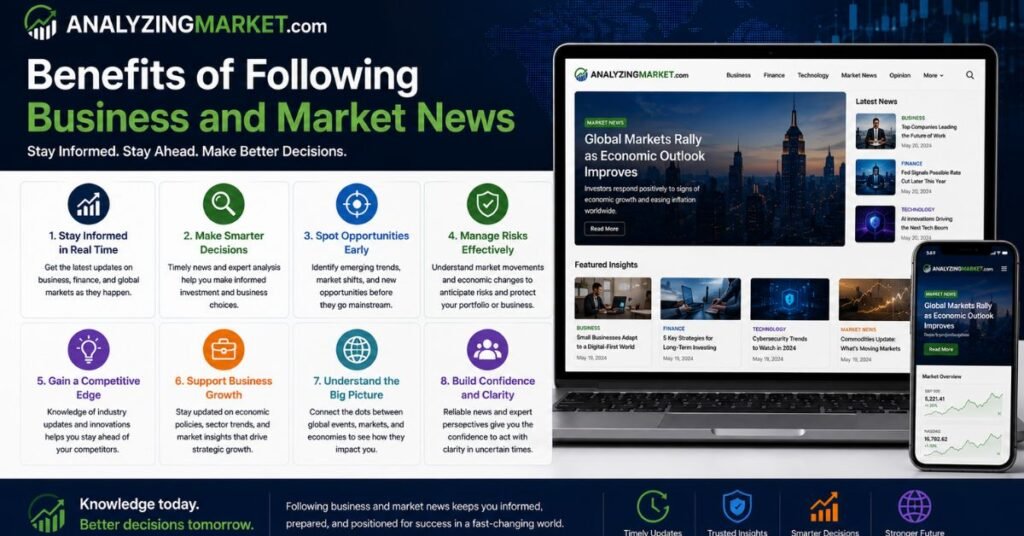
News is a map. Decisions go better when you have one. Following business reporting regularly builds habits that help at work, at school, and at home. You learn the language of money. You notice patterns sooner. You also ask better questions.
These gains stack up over time. A single article rarely changes your life. A year of steady reading can. The four benefits below show how small daily effort turns into real advantage for readers everywhere.
See Also: JournalWord.com What It Is, Content, Features, Safety, and SEO Analysis
Better Financial and Business Awareness
Awareness comes first. When you follow business news website stories daily, prices and policies stop feeling random. You start to see why a firm cut jobs or why a currency slid. That clarity helps with savings, loans, and career choices. It also improves financial planning at home. Understanding economic indicators and interest rate changes lets you time big purchases with more care. Awareness doesn’t predict the future. Yet it narrows the gap between what happens and what you expected.
Understanding Industry Developments
Industries rise and fall in cycles. Following industry developments helps you read those cycles. You learn why retailers merge, why factories automate, and why hospitals adopt new tools. Sector trends reveal where talent and money are heading. Industrial developments and changing consumer markets often explain job openings and layoffs. For workers, this insight guides career moves. For owners, it guides investment. Reading across sectors also protects you from tunnel vision. A threat in one field may be an opportunity in another.
Improved Market Knowledge
Knowledge grows by repetition. Each article adds a term, a number, or a case. Soon you can follow financial market analysis without a glossary. You also learn how market volatility behaves. Warren Buffett famously urged investors to “be fearful when others are greedy.” That advice makes sense only if you understand crowd behavior. Regular reading shows you how crowds act. It also teaches humility. Even experts misjudge global market movements. Good readers keep learning and stay flexible when facts change.
Continuous Learning and Research
News is a starting point. Real research goes deeper. When a story mentions a filing, you can read the original on the SEC’s EDGAR database. When it quotes a number, you can check the source. This habit turns passive reading into market research. It also supports long-term investment planning, because you base choices on evidence rather than hype. Over time, you build your own library of facts and ideas. Continuous learning keeps your skills fresh. It also helps you adapt as technology investments and economic trends evolve.
How to Use AnalyzingMarket.com Effectively
Reading well beats reading more. A few simple habits make a big difference. First, choose topics that fit your goals. Next, compare what you read with other trusted outlets. Finally, verify numbers before you act. These steps turn analyzingmarket com from a news feed into a real learning tool.
Build a routine that suits your life. Active traders may check daily. Long-term investors may read weekly. Watch direction over months instead of reacting to every headline. Daily noise rarely changes a solid plan. The table shows a simple rhythm for different readers.
| Reader Type | Suggested Rhythm | Focus Areas |
| Active trader | Daily | Prices, rates, earnings |
| Long-term investor | Weekly | Sector trends, economic trends |
| Founder | Two or three times a week | Funding, rivals, technology |
| Student | Daily short reads | Explainers, live cases |
Choose Relevant Business and Finance Topics
Start with your goal. A trader might pick exchange trading and stock market news. A founder might pick startup news and funding rounds. A student might begin with explainers. Then branch out. A retail story often explains a rate story. A chip story often explains a stock story. Keep a short list of favorite sections. Skim the rest once a week. This focus saves time and still protects you from blind spots. Over weeks, your reading list will shape a clear view of the market.
Compare Information With Other Reliable Sources
No single outlet gets everything right. Cross-checking is smart. Wire services carry weight for a reason. Thomson Reuters, for example, publishes its Trust Principles, which stress independence and freedom from bias. Compare headlines across several outlets. Look at official sources such as central banks and company filings. If two respected sources agree, confidence rises. If they differ, dig deeper. This habit builds independent financial verification into your routine and keeps you from relying on one voice.
Verify Financial Information Before Making Decisions
Facts come before action. Check every number before a large purchase or trade. Confirm dates, amounts, and names with primary sources. The U.S. SEC’s Investor.gov offers free tools and guides for this. Use independent financial verification each time money is at stake. Remember that investment decisions carry real risk. News can’t replace professional advice. A licensed advisor can review your financial risk management needs. Careful checking is slow. Yet it costs far less than a costly mistake.
Frequently Asked Questions
What Is AnalyzingMarket.com?
AnalyzingMarket.com is an online business publication that covers business news, financial market updates, technology news, investing guides, and sector analysis. It serves general readers and professionals who want clear reporting on companies, markets, and digital tools.
Does AnalyzingMarket.com Only Cover the Stock Market?
No. Alongside stock market news, the site covers company strategy, technology, startups, industry analysis, and the wider economy. That range helps you see how economic developments connect to corporate news and daily life.
Can Beginners Understand AnalyzingMarket.com Content?
Yes. Many articles explain complex finance and business ideas in plain language. Readers with no formal training can follow them. Start with explainers, then move to deeper market analysis as your confidence grows.
Who Should Read AnalyzingMarket.com?
Investors, founders, business professionals, students, and technology followers will all find value. Anyone who wants current reporting on markets, companies, and digital tools can benefit from steady reading.
How Often Should You Check AnalyzingMarket.com?
Daily reading suits active traders. Weekly reading works well for long-term investors and professionals who track sector trends instead of short price swings. Pick a rhythm you can keep.
Final Thoughts
AnalyzingMarket.com brings business, finance, and technology into one friendly place. Wide coverage saves you time. Plain language lowers the barrier to learning. Regular updates keep you close to market trends. Together, these strengths make it a useful financial news platform for readers across the globe.
Still, smart reading needs smart habits. Compare sources. Verify numbers. Think in months, not minutes. Use news to learn, and use professionals to advise. Do that, and analyzingmarket com can support steady financial knowledge, sharper investment decisions, and calmer choices in any market.